

The Boeing 707 is an American long-range narrow-body airliner that was developed and produced by Boeing Commercial Airplanes, its first jetliner. Developed from the Boeing 367-80, a prototype first flown in 1954, the initial 707-120 first flew on December 20, 1957.
The Boeing 747 is a large, long-range wide-body airliner designed and manufactured by Boeing Commercial Airplanes in the United States. After introducing the 707 in October 1958, Pan Am wanted a jet 2 1⁄2 times its size. With a ten-abreast economy seating, it typically accommodates 366 passengers in three travel classes.
The Boeing B-17 Flying Fortress is a four-engined heavy bomber developed in the 1930s for the United States Army Air Corps (USAAC). It was primarily employed by the USAAF in the daylight strategic bombing campaign of World War II against German industrial, military and civilian targets.
The Boeing B-29 Superfortress is an American four-engined propeller-driven heavy bomber designed by Boeing and flown primarily by the United States during World War II and the Korean War. One of the largest aircraft of World War II, the B-29 had state-of-the-art technology, including a pressurized cabin, dual-wheeled, tricycle landing gear, and an analog computer-controlled fire-control system that allowed one gunner and a fire-control officer to direct four remote machine gun turrets.
The Boeing B-52 Stratofortress (also known as the "BUFF") is an American long-range, subsonic, jet-powered strategic bomber. The B-52 was designed and built by Boeing, which has continued to provide support and upgrades. It has been operated by the United States Air Force (USAF) since the 1950s.
The Harrier, informally referred to as the Harrier Jump Jet, is a family of jet-powered attack aircraft capable of vertical/short takeoff and landing operations (V/STOL).
The B-24 was used extensively in World War II. It served in every branch of the American armed forces as well as several Allied air forces and navies. It saw use in every theater of operations. Along with the B-17, the B-24 was the mainstay of the US strategic bombing campaign in the Western European theater.
The Consolidated PBY Catalina is a flying boat and amphibious aircraft that was produced in the 1930s and 1940s. It was one of the most widely used seaplanes of World War II. Catalinas served with every branch of the United States Armed Forces and in the air forces and navies of many other nations.
The Convair B-36 "Peacemaker" is a strategic bomber built by Convair and operated by the United States Air Force (USAF) from 1949 to 1959. The B-36 is the largest mass-produced piston-engined aircraft ever built.
The Douglas A-1 Skyraider (formerly known as AD Skyraider) is an American single-seat attack aircraft in service from 1946 to the early 1980s. The Skyraider had a remarkably long and successful career; it became a piston-engined anachronism in the jet age, and was nicknamed "Spad", after the French World War I fighter.
The Douglas A-4 Skyhawk is a single-seat subsonic carrier-capable light attack aircraft developed for the United States Navy and United States Marine Corps in the early 1950s. The delta-winged, single turbojet engined Skyhawk was designed and produced by Douglas Aircraft Company, and later by McDonnell Douglas.
The Douglas A-26 Invader (designated B-26 between 1948 and 1965) is an American twin-engined light bomber and ground attack aircraft. Built by Douglas Aircraft Company during World War II, the Invader also saw service during several major Cold War conflicts.
The Douglas C-47 Skytrain or Dakota is a military transport aircraft developed from the civilian Douglas DC-3 airliner. It was used extensively by the Allies during World War II and remained in front-line service with various military operators for many years.
The General Dynamics F-16 Fighting Falcon (referred to as the "Viper" by its crew) is a single-engine multirole fighter aircraft originally developed by General Dynamics for the United States Air Force (USAF). Designed as an air superiority day fighter, it evolved into a successful all-weather multirole aircraft.
The General Dynamics F-111 Aardvark is a retired supersonic, medium-range, multirole combat aircraft. Production variants of the F-111 had roles that included ground attack (e.g. interdiction), strategic bombing (including nuclear weapons capabilities), reconnaissance and electronic warfare.
The Grumman F-14 Tomcat is an American carrier-capable supersonic, twin-engine, two-seat, twin-tail, variable-sweep wing fighter aircraft. First flown on 21 December 1970, the F-14 served as the U.S. Navy's primary maritime air superiority fighter, fleet defense interceptor, and tactical aerial reconnaissance platform into the 2000s.
The Grumman F4F Wildcat is an American carrier-based fighter aircraft that entered service in 1940 with the United States Navy.
The Lockheed Constellation ("Connie") is a propeller-driven, four-engined airliner built by Lockheed Corporation starting in 1943. The Constellation series was the first pressurized-cabin civil airliner series to go into widespread use. Its pressurized cabin enabled commercial passengers to fly well above most bad weather for the first time, thus significantly improving the general safety and ease of air travel.
The Lockheed C-130 Hercules is an American four-engine turboprop military transport aircraft designed and built originally by Lockheed (now Lockheed Martin). Capable of using unprepared runways for takeoffs and landings, the C-130 was originally designed as a troop, medevac, and cargo transport aircraft. The versatile airframe has found uses in a variety of other roles, including as a gunship (AC-130), for airborne assault, search and rescue, scientific research support, weather reconnaissance, aerial refueling, maritime patrol, and aerial firefighting. It is now the main tactical airlifter for many military forces worldwide.
The Lockheed F-104 Starfighter is a single-engine, supersonic interceptor aircraft which was extensively deployed as a fighter-bomber during the Cold War. Created as a day fighter by Lockheed as one of the Century Series of fighter aircraft for the United States Air Force (USAF), it was developed into an all-weather multirole aircraft in the early 1960s and produced by several other nations, seeing widespread service outside the United States.
The Lockheed P-38 Lightning is an American single-seated, twin piston-engined fighter aircraft that was used during World War II. Developed for the United States Army Air Corps by the Lockheed Corporation, the P-38 incorporated a distinctive twin-boom design with a central nacelle containing the cockpit and armament. Along with its use as a general fighter, the P-38 was used in various aerial combat roles, including as a highly effective fighter-bomber, a night fighter, and a long-range escort fighter when equipped with drop tanks.
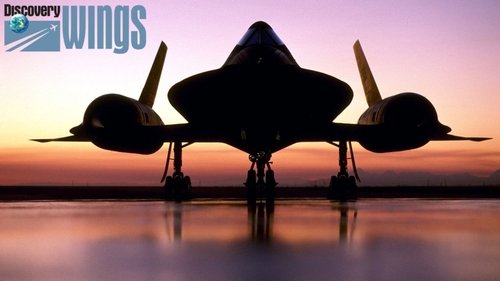
The Lockheed SR-71 "Blackbird" is a long-range, high-altitude, Mach 3+ strategic reconnaissance aircraft developed and manufactured by the American aerospace company Lockheed Corporation. It was operated by both the United States Air Force (USAF) and NASA.
The Martin B-26 Marauder is an American twin-engined medium bomber that saw extensive service during World War II. The B-26 was built at two locations: Baltimore, Maryland, and Omaha, Nebraska, by the Glenn L. Martin Company.
The Martin B-57 Canberra is an American-built, twin-engined tactical bomber and reconnaissance aircraft that entered service with the United States Air Force (USAF) in 1953.
The McDonnell Douglas F-4 Phantom II is an American tandem two-seat, twin-engine, all-weather, long-range supersonic jet interceptor and fighter-bomber originally developed by McDonnell Aircraft for the United States Navy.
The McDonnell Douglas F-15 Eagle is an American twin-engine, all-weather tactical fighter aircraft designed by McDonnell Douglas (now part of Boeing). The Eagle first flew in July 1972 and entered service in 1976. It is among the most successful modern fighters, with over 100 victories and no losses in aerial combat, with the majority of the kills by the Israeli Air Force.
The McDonnell Douglas F/A-18 Hornet is a twin-engine, supersonic, all-weather, carrier-capable, multirole combat jet, designed as both a fighter and attack aircraft (hence the F/A designation). Designed by McDonnell Douglas (now part of Boeing) and Northrop (now part of Northrop Grumman), the F/A-18 was derived from the latter's YF-17 in the 1970s for use by the United States Navy and Marine Corps. The Hornet is also used by the air forces of several other nations, and by the U.S. Navy's Flight Demonstration Squadron, the Blue Angels.
The North American B-25 Mitchell is an American medium bomber that was introduced in 1941 and named in honor of Major General William "Billy" Mitchell, a pioneer of U.S. military aviation. Used by many Allied air forces, the B-25 served in every theater of World War II, and after the war ended, many remained in service, operating across four decades.
The North American F-86 Sabre, sometimes called the Sabrejet, is a transonic jet fighter aircraft. Produced by North American Aviation, the Sabre is best known as the United States' first swept-wing fighter that could counter the swept-wing Soviet MiG-15 in high-speed dogfights in the skies of the Korean War (1950–1953), fighting some of the earliest jet-to-jet battles in history. Considered one of the best and most important fighter aircraft in that war, the F-86 is also rated highly in comparison with fighters of other eras. Although it was developed in the late 1940s and was outdated by the end of the 1950s, the Sabre proved versatile and adaptable and continued as a front-line fighter in numerous air forces.
The North American F-100 Super Sabre is an American supersonic jet fighter aircraft that served with the United States Air Force (USAF) from 1954 to 1971 and with the Air National Guard (ANG) until 1979. The first of the Century Series of USAF jet fighters, it was the first USAF fighter capable of supersonic speed in level flight. The F‑100 was designed by North American Aviation as a higher-performance follow-on to the F-86 Sabre air-superiority fighter. Adapted as a fighter-bomber, the F-100 was superseded by the high-speed Republic F-105 Thunderchief for strike missions over North Vietnam. The F‑100 flew extensively over South Vietnam as the air force's primary close air-support jet until being replaced by the more efficient subsonic LTV A-7 Corsair II.