

1
An introduction to the long development of Chinese civilization, tracing the ideas, institutions, cultural traditions and historical forces that shaped China’s distinctive path from antiquity to the end of imperial rule.

An introduction to the long development of Chinese civilization, tracing the ideas, institutions, cultural traditions and historical forces that shaped China’s distinctive path from antiquity to the end of imperial rule.
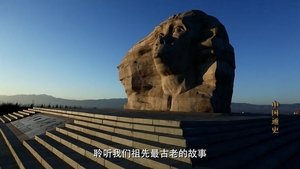
Archaeological discoveries reveal the prehistoric peoples who lived across ancient China and the gradual formation of communities, cultures and shared traditions that would contribute to later Chinese civilization.
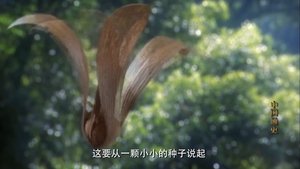
The episode explores the origins of farming in ancient China, including the domestication of millet and rice, the growth of settled communities and the social changes produced by agricultural life.
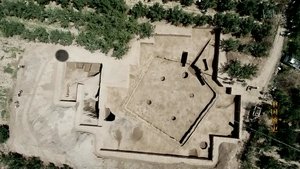
Early cities, ritual centers, crafts and systems of social organization illuminate the transition from Neolithic cultures to complex civilization in the lands that became China.

Competing regional societies developed fortified settlements, political hierarchies and ritual authority, laying the foundations for the earliest states recorded in Chinese history.
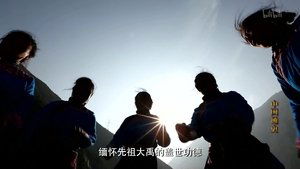
Archaeology and ancient texts are examined in the search for the Xia, traditionally regarded as China’s first dynasty, with particular attention to the Erlitou culture and debates over its identity.
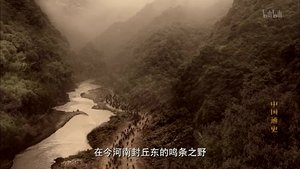
The Shang dynasty emerges as a powerful Bronze Age kingdom before internal weakness and military defeat bring its rule to an end at the hands of the Zhou.
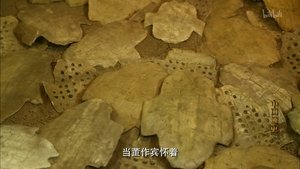
Oracle bones, bronze vessels, royal tombs and sacrificial practices reveal the political order, religious beliefs, warfare and artistic achievements of Shang civilization.
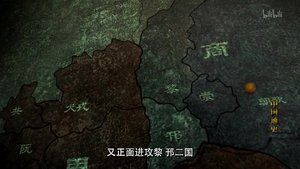
The Zhou campaign against the last Shang king culminates in the Battle of Muye, establishing a new dynasty and introducing the enduring political idea of the Mandate of Heaven.
Serving as regent for the young King Cheng, the Duke of Zhou suppresses rebellion, consolidates Zhou rule and helps shape political and ritual institutions revered by later generations.
The authority of the Zhou kings weakens as regional lords grow more powerful, leading to the fall of the Western Zhou and the fragmented political order of the Eastern Zhou.
Powerful states and ambitious rulers compete for leadership while alliances, reforms and warfare transform the political landscape of the Spring and Autumn period.
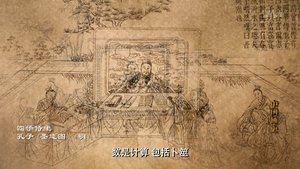
The life and teachings of Confucius are explored, from his search for ethical government to the development of ideas about ritual, virtue, education and social responsibility.
Rival states adopt sweeping military, administrative and economic reforms as rulers seek stronger governments and armies during an age of intensifying competition.
The seven major powers struggle for survival and supremacy through diplomacy, strategy and mass warfare, setting the stage for Qin’s eventual conquest of its rivals.
Philosophers including Confucians, Daoists, Mohists and Legalists offer competing answers to the disorder of their age, creating a rich intellectual legacy for Chinese civilization.
Philosophers including Confucians, Daoists, Mohists and Legalists offer competing answers to the disorder of their age, creating a rich intellectual legacy for Chinese civilization.
The king of Qin conquers the rival states, becomes China’s First Emperor and imposes far-reaching systems of administration, law, measurement, writing and imperial control.
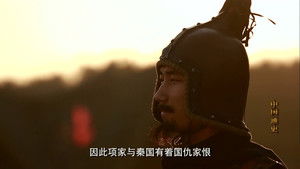
After the fall of Qin, Xiang Yu and Liu Bang battle for control of China in a dramatic civil war that ends with the founding of the Han dynasty.
The early Han balances centrally administered commanderies with semi-autonomous kingdoms, creating tensions that test the new dynasty’s ability to maintain unity.
Emperors Wen and Jing reduce taxes and state burdens, encourage recovery and strengthen the Han through cautious government, producing an era remembered for stability and prosperity.
Emperor Wu expands Han power, confronts the Xiongnu, centralizes authority and promotes Confucian state ideology, while the costs of warfare place heavy demands on the empire.
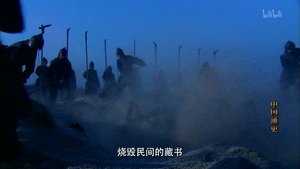
Confucian classics become central to education, scholarship and government as Han thinkers interpret ancient texts and establish traditions that influence imperial China for centuries.
Following Emperor Wu’s expensive campaigns, the Han court pursues recovery, administrative reform and more restrained government under Emperors Zhao and Xuan.
Wang Mang seizes the throne and launches ambitious reforms intended to restore ancient institutions, but resistance, economic disruption and rebellion bring his Xin dynasty to collapse.
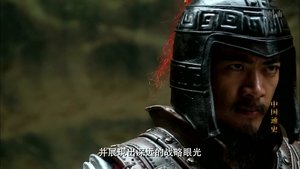
Liu Xiu reunifies the realm after years of rebellion, restores the Han dynasty as Emperor Guangwu and rebuilds imperial government from a new capital at Luoyang.
Diplomacy, conquest and long-distance trade connect Han China with Central Asia and lands farther west, carrying goods, technologies, religions and cultures across Eurasia.
Scholar-officials criticize corruption and eunuch power at the Eastern Han court, provoking political purges that deepen factional conflict and weaken the dynasty.
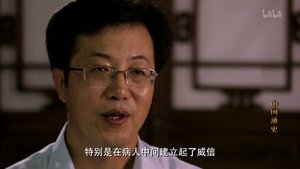
Religious movements, social distress and resentment of the Han government erupt into the Yellow Turban uprising, accelerating the breakdown of imperial authority.
The collapse of the Han gives rise to the rival states of Wei, Shu and Wu, whose rulers and generals compete through warfare, diplomacy and shifting alliances.