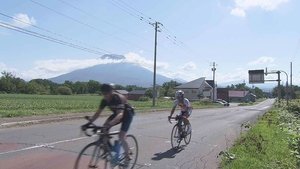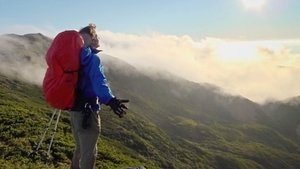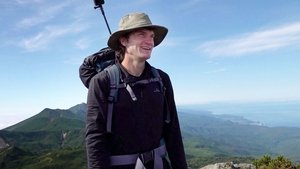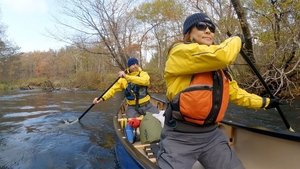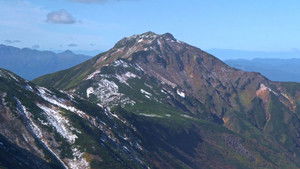
The volcanic Mt. Furanodake rises in the south of the Taisetsu Mountain Range with a diverse environment. The program host sets out on a hike through a deep forest, crossing streams and enjoying beautiful waterfalls. After 2 hours of walking, he reaches an open space. It is a marshland formed by rainwater collecting on top of the lava. Later, we show you some footage of a Northern Pika that stores leaves in its den to survive the long winter in an alpine zone, where not many plants are able to grow.
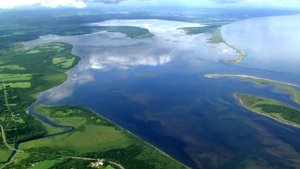
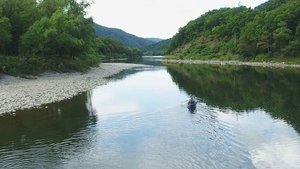
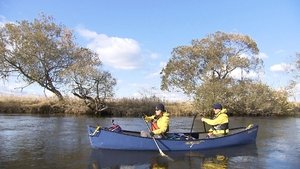
Our stage this time is Lake Furen which is connected to the Sea of Okhotsk in eastern Hokkaido Prefecture. It is a brackish lake with a circumference of 65km. The program host canoes down the river that flows into the lake, and enjoys watching white-tailed eagles and other birds. In the marshland facing the sea, he also observes sika deer at close range. Later, we show you some footage of red-crowned cranes raising their young by the lake where the tide ebbs and flows, as well as red fox feeding on fish left on the tidal flats.
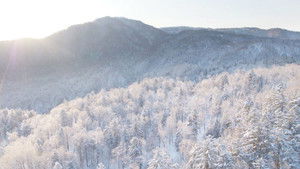
Shimukappu is located almost in the center of Hokkaido Prefecture. It is an area that gets severely cold in winter, where the snow-covered deep forest stretches. The program host explores the forest on a fat bike, which can be ridden easily through snowy terrain. He enjoys the spectacular scenery and the fluffy fresh snow as if he were a little child again. Later, we also show you the life of Siberian flying squirrels, which congregate in large groups only during winter by building a nest inside the hollow of a tree trunk.
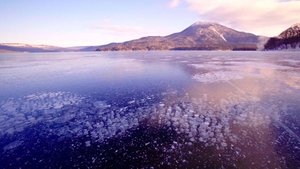
Our stage this time is Lake Akan in the eastern part of Hokkaido Prefecture. It is a caldera lake created as a result of ancient volcanic activity. In the dead of winter, the lake is completely frozen over. Our program host walks around the surrounding forests inhabited by a variety of wild fauna, as well as over the frozen lake to experience the flourishing forest and the energy of the volcano, which is still active today. Later, we show you rare footage of the lakeside facility of the Ainu, the indigenous people of Hokkaido, as well as some mysterious phenomena created in the lake by the intense winter conditions.
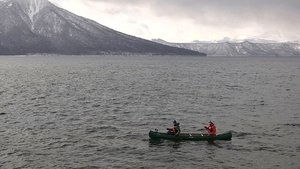
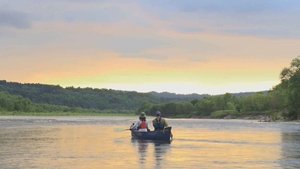
Our stage this time is Lake Shikotsu, located about an hour's drive from Hokkaido Prefecture's capital city of Sapporo with a population of over 1.9 million. Although the lake does not freeze over even during the harsh winter, its shores are decorated with beautiful ice formations. Our program host takes a canoe trip along Lake Shikotsu and the Chitose River, which flows out of the lake, to enjoy the beauty of the icy landscapes and wildlife encounters on the water. Later, we show you some footage of the creatures that survive the winter at Lake Shikotsu.
Skiers and snowboarders from all over the world come in search of Japan's finest snow, Japan Powder Snow, or "Japow" for short. We hope you will thoroughly enjoy this special episode of Wild Hokkaido, introducing you to Japow. Our stage this time is Niseko, one of the top resort destinations in all of Hokkaido Prefecture, where fresh snow piles up almost every day during winter. The program host enjoys the great outdoors through a variety of fun winter activities, aside from skiing and snowboarding.
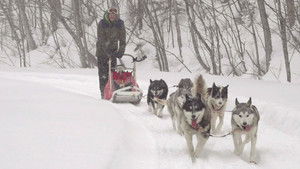
Our stage this time is Kitataisetsu, located near the center of Hokkaido Prefecture. The program's participant will try dogsledding in the snowfields here. A dogsled expert for this episode has learned in Alaska, the home of dogsledding, and has been running dog sledding tours here for the past 8 years. By becoming one with the dogs that he has raised with loving care, he can run through the undulating snowfields like the wind. Will the participant be able to get through to the dogs? Later, we show you the footage that captured the breathtaking natural phenomena in Kitataisetsu.
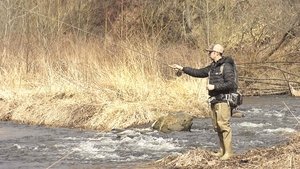
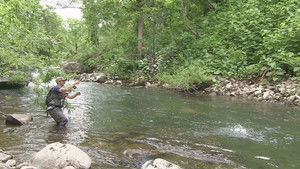
Our stage this time is the Tokachi Plain in the eastern part of Hokkaido Prefecture. We enjoy fishing in a tributary that flows into the Tokachi River in early spring. The river, which runs through a flat farmland, has a gentle current and provides a hiding place for large rainbow trout. We visited the river with 2 fishers this time, one of whom tries a Western fly-fishing method, and the other one tries his hand at "Tenkara," the Japanese method of hook-and-line fishing, to catch a large fish over 40 centimeters in length. Later, we also show you the fantastic scenery created by the gentle current of the Tokachi River during the severe winter months.
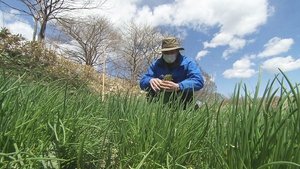
Spring has arrived in Hokkaido Prefecture. During this season, people enjoy gathering and eating delicious wild plants that have sprouted in the mountains and fields. This time, in Shiraoi Town facing the Pacific Ocean, a Canadian man living in Hokkaido tries his hand at picking wild vegetables, guided by an indigenous Ainu woman who has lived with the blessings of nature. He learns how to identify, pick and cook edible wild plants, as well as the lessons of nature that have been inherited by the Ainu people. Later, we also show you some footage of the unique spring flowers that bloom in the forests of Hokkaido.
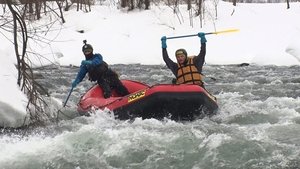
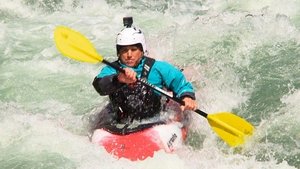
Our stage this time is the Mukawa River that flows along the Pacific side of Hokkaido Prefecture. Among kayakers, it is renowned as one of the most outstanding rapids in Japan. In spring, a kayaker who has acted as a river guide on famous raging rivers all over the world is taking on the challenge to kayak along the raging river swollen with snowmelt, testing his skills and judgment. He experiences the rich nature in Mukawa, weaving his way through the boulders in splashing waters. Later, we also show you footage of the wild creatures that live in the upper reaches of the Mukawa River.
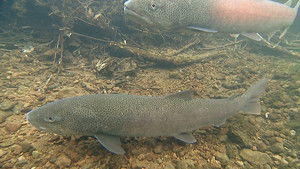
In the legend of the Ainu, an indigenous people in Japan, there is a giant fish that is believed to be able to even swallow a bear. The name of the fish is Japanese huchen. In this episode, a French fishing guide tries his hand at fishing for Japanese huchen, which can grow up to 2 meters in length, at Lake Shumarinai in northern Hokkaido Prefecture. He uses lures of different colors and shapes to catch the giant fish called "fish of phantom," but will he be able to catch it? Later, we also show you footage of a Japanese huchen and reveal why it can grow so large.