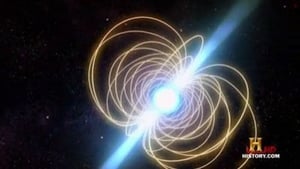
Season 4 opens with an exploration of dying stars, the process where stars become supernovas, and, occasionally, become the biggest blast in the universe as a gamma ray burst (GRB). One death star, named WR104, lurks 8,000 light-years from Earth and some believe its GRB arrow is aimed directly at us. A death star galaxy named 3C321 is a frightening vision of what could one day befall the Milky Way galaxy: a companion galaxy's black hole being hammered with a constant blast of high-energy particles, wreaking havoc with its celestial bodies. Nearby, Death Stars Eta Carinae and Betelgeuse burn through their fuel supplies as they hurtle toward extinction...which just may be too close for comfort.
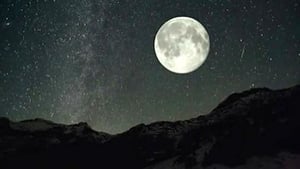
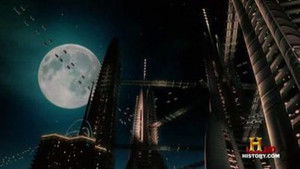
Without the moon, Earth would be a very different and desolate place today--four hours of sunlight with pitch-black nights, steady 100-mph winds spawning giant hurricanes that last for months, and virtually no complex life forms, much less humans. Safe to say, we probably owe our very existence to the moon. But what if it suddenly disappeared?
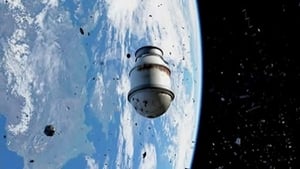
Every year, thousands of objects both natural and manmade plummet through our atmosphere and crash into the Earth. These menacing messengers from the sky provide scientists with amazing insights into the natural, and not so natural, phenomena of the cosmos. From space rocks crashing through homes to cosmic boulders triggering mass extinctions to rocket parts landing on front lawns, explore objects that fall from the heavens, such as asteroids, comets, meteor showers and space debris.
An examination of the most powerful explosions and blasts in the universe. Includes a look at the Mexico's Yucatán peninsula and the impact which caused the Chicxulub crater. Also a look at gamma rays and Big Bang Theory.
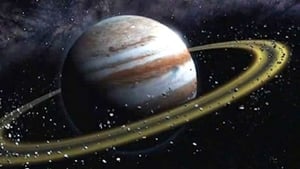
They are breathtaking, lethal and a constant source of surprise. The stunning rings of Saturn have mesmerized countless scientists over the centuries. With particles the size of a house shooting at 53,000 miles per hour around the planet, any spacecraft passing through would meet an instant and catastrophic end. Inside the rings is like a NASCAR race - with bumping, jostling and frequent collisions that can cause a massive spin-out. Lesser known are the other planets that have rings - Uranus, Jupiter, Neptune, possibly Pluto and Mars. Even Earth has a ring. Comprised of some 200 satellites in a geosynchronous orbit, it is the only known man-made ring in the universe. But the most remarkable thing about rings is that they contain the story of the birth of our solar system, and entire distant galaxies. Rings are more than a wonder of the universe - they reveal the secrets of our own origins.
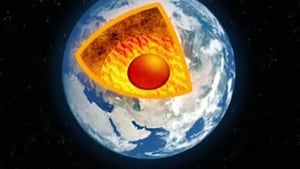
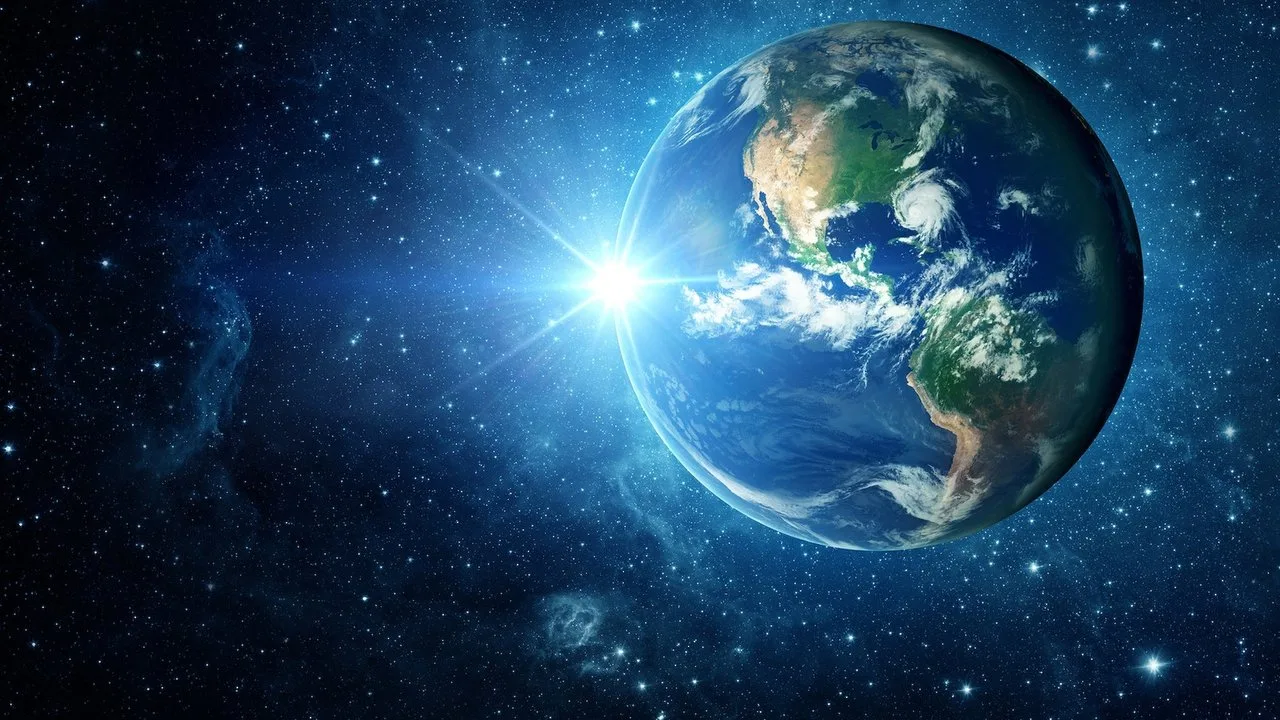
Experts cook up ways you could destroy the Earth, including swallowing it with a black hole, blowing it up with anti-matter, hurling it into the Sun, and switching off gravity.
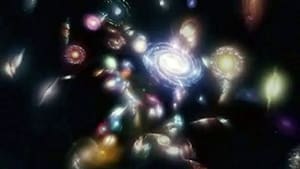
They are the one-stop-shopping places for learning all about the nature and variety of stars in the Universe. They're unique, because in clusters, all the stars were born at about the same time, from the same material and all are at the same approximate distance from Earth. This means we can be sure that any differences among them are due to their true natures and not distorted by different distances from Earth and other factors.
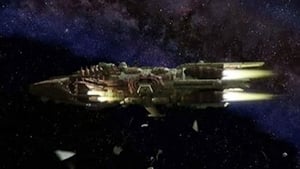
Outer space is already an essential part of America's ability to fight wars. Our military depends on satellites for many things, such as communications, reconnaissance and targeting information. But so far, no country has put weapons into space, although the U.S. and China have both shown they can shoot down satellites with ground-based missiles. If weapons do become a part of space, how will they work, how effective will they be, and what type of damage could they do? From ground-based lasers to telephone-pole sized rods hurtling from space at two miles per second to the far out weapons of the distant future, it's time to "lock and load" for Space Wars.