
1
Whether it’s ecstasy, speed or crystal meth, producing illicit synthetic drugs generates toxic waste. This often ends up in the local environment, posing a threat to humans, wildlife and the land. We look at cases in the Netherlands and Germany.


Whether it’s ecstasy, speed or crystal meth, producing illicit synthetic drugs generates toxic waste. This often ends up in the local environment, posing a threat to humans, wildlife and the land. We look at cases in the Netherlands and Germany.
No hay descripción disponible para este episodio.
No hay descripción disponible para este episodio.
Many animals and plants are threatened by artificial light. Numerous organisms have found their evolutionary niche in the dark of night, and now have to adapt to bright nights. Not all of them succeed.
No hay descripción disponible para este episodio.
No hay descripción disponible para este episodio.
No hay descripción disponible para este episodio.
No hay descripción disponible para este episodio.
No hay descripción disponible para este episodio.
No hay descripción disponible para este episodio.
No hay descripción disponible para este episodio.
The extraction of gas and oil poses a greater threat than previously thought. Leaks at disused drilling sites can trigger an environmental disaster at any time. If toxic substances escape, human lives are at risk.
No hay descripción disponible para este episodio.

Champagne: a symbol of glamor and celebration. Tens of thousands of migrant workers head to France every year to harvest grapes in the Champagne region. But some pay a high price to bring this luxury product to market.
For some, cryptocurrencies are a dangerous bubble. For others, they represent the future of money. But what are the actual uses - and risks -- of cryptocurrencies? This documentary explores how crypto is altering global financial architecture.

Mass tourism in South Tyrol is endangering the unique beauty of the Dolomites, a UNESCO World Heritage Site. The region has just 530,000 inhabitants, while as many as 33 million overnight stays are recorded every year. Too many, according to locals.
No hay descripción disponible para este episodio.
No hay descripción disponible para este episodio.
Modern medicine is making it possible to keep people alive for longer and longer. However, hospitals can also earn a lot of money by treating the seriously ill, especially in intensive care units. Intensive care physician Uwe Janssens believes that, when it comes to death and dying, economics often play a key role. Doctors, nurses and the hospital's chaplain meet regularly to discuss ethics: Should a critically ill patient be assisted in dying, or kept alive artificially? What is the aim of therapy? What is the patient's will? What is medically feasible, what makes sense? Even for doctors, decisions at the end of a patient's life are never easy.
This documentary hears from people who’ve been turned away or received inadequate care in a medical emergency; from midwives who report on racism in the delivery room; from students who criticize teaching according to white norms; as well as from doctors who reflect on the problem.
No hay descripción disponible para este episodio.

She’s available in all skin colors, she’s diverse and inclusive. Created by businesswoman Ruth Handler, unveiled in New York in 1959, Barbie’s long been a money-maker. With millions of followers on Instagram, she’s now an influencer, too.
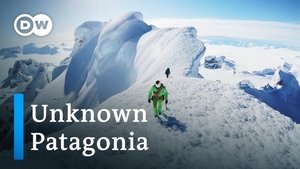
Patagonia's icefields are very difficult to access. As a result, they remain largely unexplored by climate researchers. Now, a scientist and two extreme mountaineers are venturing into this hard-to-reach area, in search of new data for climate research.
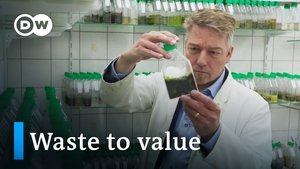
The research project called "Waste to value”, Kaiserslautern University of Applied Sciences biologist Michael Lakatos and his team are investigating the potential uses of microalgae. Some species form limestone, which could be used to make bio-cement - thereby reducing CO₂. Other forms of algae could serve as a biologically-based plastic substitute. Yet others could produce edible dyes - using sunlight and CO₂. The researchers are traveling the world in search of especially talented algae and bacteria.

A Swiss start-up that produces artificial lungs is looking towards quantum algorithms to become more efficient and, for example, help find a cure for cancer and rendering experiments on animals redundant. A private investor has brought these goals one step closer by allowing Swiss start-ups to use quantum computers commercially. The technology is still considered to be at the beginning of its development curve, science does not yet know its full capabilities. Big players such as Google and IBM are in competition to create ever newer and faster quantum computers. This film opens a window into the world of supercomputers, and explores how their potential and their dangers seem to exist side by side.
No hay descripción disponible para este episodio.
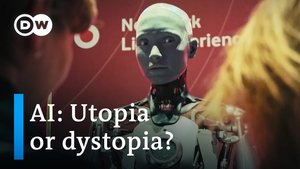
The documentary follows key figures from the tech industry, science and politics who are working on artificial intelligence around the globe. They are tasked with making far-reaching decisions within a very short space of time. How can the technology’s potential be harnessed, while preventing a science fiction dystopia? The potential benefits of the currently emerging super-infrastructure are as limitless as its existential dangers. The latter include disinformation and election manipulation, as well as new forms of warfare and surveillance.
No hay descripción disponible para este episodio.
No hay descripción disponible para este episodio.
No hay descripción disponible para este episodio.