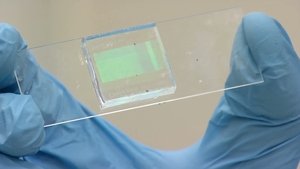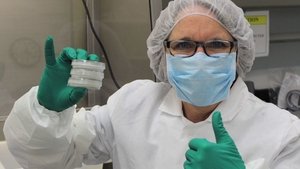
In episode 201 of SciTech Now, scientists determine the viability of plant life in space via an experiment aboard the International Space Station; Rod Breslau on the growing popularity of eSports; John Howell of the Univesity of Rochester on the science behind invisibility; and a New Jersey water treatment plant is reducing its greenhouse gas emissions by turning waste into energy.
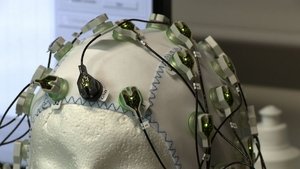
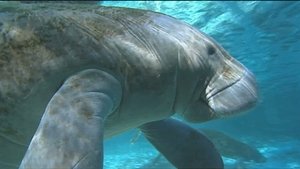
In episode 202 of SciTech Now, scientists at the University of South Florida use a new method for tracking fish populations; Dr. Martin Blaser on the pitfalls of antibiotics, from allergies to obesity; John Howell of the Univesity of Rochester on the science behind invisibility; and a New Jersey water treatment plant is reducing its greenhouse gas emissions by turning waste into energy.

In episode 203 of SciTech Now, the New York Fashion Tech Lab is a tech accelerator is helping companies at the intersection of retail and technology modernize the fashion industry; Ruth DeFries, professor of Ecology and Sustainable Development and Columbia University’s Earth Institute, explains how the history of human development has impacted our planet; The Blue Ocean Film Festival aims to spread awareness about what lies underwater, with help from aquatic filmmaker and explorer Fabien Cousteau; the Melrose Center is a 26,000 square foot state-of-the-art facility at the Orlando Public Library; and PBS Secrets of the Dead investigates the real possibility that a Trojan Horse could have been used to trick Troy into defeat.
In episode 204 of SciTech Now, go trackside at a Trans Am road race to learn how racers make their cars aerodynamic; Jon Schull, co-founder of e-Nable, discusses how his organization is making low-cost 3-D printed prosthetics available to children around the world; TripExpert co-founder Emily Hughes explains how the site aims to be a definitive statement of the overall quality based on professional reviews, instead of user reviews; the Financial Times investigates whether mass-market sport-related technologies can help mitigate some of the risks associated with contact sports; as the number of social media users continues to grow, some universities have incorporated the communication tool into their curriculum.
In episode 205 of SciTech Now, we take you into the lab to see how robots are changing the surgical landscape; the science educator, the CEO of the Planetary Society, the “Science Guy” himself, Bill Nye, joins us to talk about his new book and about his Kickstarter project to create a breadbox sized spacecraft powered by the light of the sun; Science Friday shows us how a badminton birdie’s unique aerodynamic shape makes badminton the fastest sport around; and Abalone are sea snails that graze on algae and seaweed, but overfishing and poaching have left them on the edge of extinction.
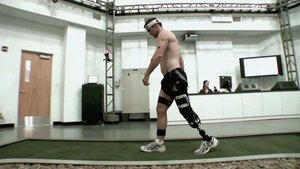
In this episode of SciTech Now, some oil companies are cutting back on their operations and hoping to reduce waste in the process; Springboard Enterprises CEO Kay Koplovitz discusses supporting women in business; we go inside the Center for Autism and Neurodevelopmental Disorders, where staff target the core cause of autism and provide therapy and support for those on the spectrum; and the Financial Times explores how the worlds of biology and robotics are coming together and how bionics is now being applied in healthcare.
In this episode of SciTech Now, archaeology moves underwater as researchers discover clues from the past; planetary physicist Phil Metzger on the New Horizons flyby over Pluto; one southern California couple is going to extreme measures to revolutionize the physical therapy industry; and PBS Secrets of the Dead has the extraordinary story of a young pioneer, whose remains were found in an archaeological excavation.
In this episode of SciTech Now, the largest desalination plant in North America is making Tampa Bay water safer and cleaner; space architecture and engineering expert Madhu Thengavelu discusses building settlements on the Moon and Mars; brain surgery performed while awake helps mitigate symptoms of Parkinson’s disease; and the Financial Times reports on the one-atom thick layer of carbon called graphene that is 200 times stronger than steel and thinner than a sheet of paper.
In this episode of SciTech Now, scientists use algae to trace the origins of sex; the decommissioned space shuttle Atlantis has a new home in Orlando, Florida; the company deCervo explores the neuroscience involved in athletics; and mobile security research that tries to protect us from hackers.
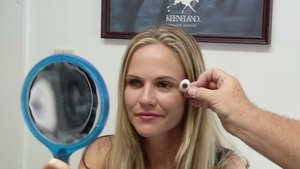
In this episode, viewers get a glimpse of a new, more efficient wind turbine with an unusual beginning; we learn how data and Statcast is changing the experience of watching a baseball game; mirror therapy employs the illusion of reflection to trick the brain into faster motor recovery; and zero-emission motorcycles are helping police departments.
In this episode of SciTech Now, a four-story magnet may hold the key to clean, renewable energy; Jennifer Vento, from the digital marketing firm Women Online, discusses how women around the world are joining together to create innovative new technologies that protect women both on- and offline; Neil deGrasse Tyson discusses the future of space exploration.
Scientists attempt to answer the question, “How many licks does it take to get to the center of a lollipop?”; filmmaker and producer Emily Driscoll discusses the science behind the lollipop mystery; climate scientist Ken Caldeira talks climate intervention strategies; and one school in Tampa is using technology to facilitate classroom learning.
Invasive species threaten Florida’s ecosystem; professor Madhu Thangavelu discusses the future of collaborative robotics; serial entrepreneur Brian Hecht explains how emerging job search engines are altering the employment marketplace; planetary physicist Phil Metzger looks into the future of Mars exploration; and we go behind the scenes at the AMNH.
In this episode of SciTech Now, an international group of computer coders have joined forces with a composer to showcase fractals in a whole new light; the founder of the renewable energy company Uncharted Play has developed unusual sources of electricity for the developing world; at the Tech Sassy Girlz Hackathon in Orlando, middle and high school girls get a crash course in coding; and more.