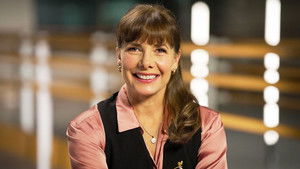
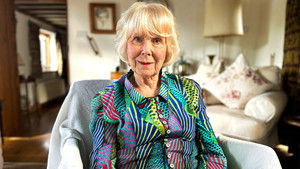
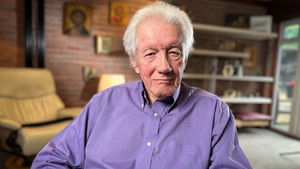
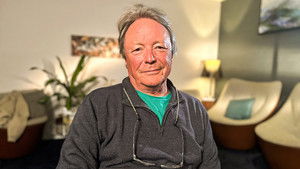
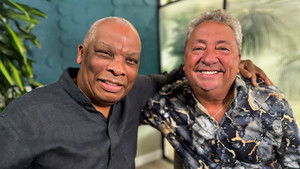
Renowned ballet dancer Dame Darcey Bussell introduces us to a gem from the BBC’s dance archives, The Magic of Dance, which was first transmitted in 1979 to great acclaim and is presented by celebrated ballet dancer, the unforgettable Margot Fonteyn.
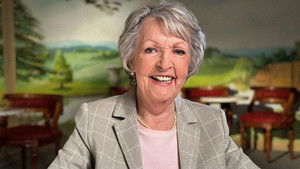
Penelope Keith casts an affectionate eye back on the much-loved sitcom To the Manor Born and her role as upper-class Audrey fforbes-Hamilton, who finds herself down on her luck and forced to change her circumstances and home after the death of her husband.
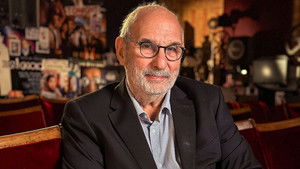
Andrew Davies looks back on Pride and Prejudice (1995) and talks about how he adapted the story from Jane Austen's classic novel.
Orson Welles was the genius who changed the face of cinema with his 1941 directorial debut, Citizen Kane, and who became one of the key artistic figures of the 20th century – a great raconteur as well as a great artist, and larger than life in every sense.
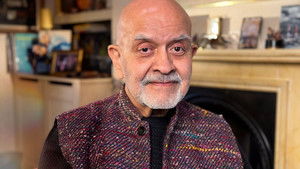
In 1965, a young Waris Hussein was perhaps the only experienced Indian director working in British television and was horrified when he discovered that the BBC was planning a TV adaptation of EM Forster’s A Passage to India without him at the helm. As luck would have it, a twist of fate meant he did end up in the director’s chair. Waris shares fond memories of his experiences, describing the filming challenges involved in portraying a true sense of India, recalling what it was like working with a stellar cast that included the likes of Dame Sybil Thorndike, Cyril Cusak and Virginia McKenna, and outlining the pressure to do full justice to one of the great novels of the 20th century.
As BBC Four marks the 50th anniversary of the classic film comedy ‘Blazing Saddles’, Alan Yentob looks back on his experiences working with the great Mel Brooks, recently presented with an Honorary Oscar in recognition of a boundary-breaking career that shocked audiences, but always left them laughing too. Here Alan reflects on what it was like being a producer encountering the comic genius who created ‘The Producers’ and how his and Mel’s working relationship quickly developed into something that one newspaper critic once described as nothing less than a love story.
Claire Bloom introduces a rare screening of the BBC’s 1961 adaptation of Anna Karenina, in which she delivers one of her own personal favourite performances, playing Tolstoy’s tragic heroine. Claire recalls the challenges involved in bringing 'the world’s greatest novel' to the small screen, assesses how successfully the drama captured Anna’s tale and shares her memories of acting opposite a relatively unknown co-star called Sean Connery, who was cast as Anna’s charismatic lover, Vronsky, not long before James Bond turned him into an international superstar.
National treasure Miriam Margolyes looks back on her role in the BBC’s 1995 adaptation of one of the much-loved jewels of 20th-century British literature, Stella Gibbons’s 1930s comic classic, Cold Comfort Farm. Directed by John Schlesinger, who won an Oscar for Midnight Cowboy, the drama brought together an impressive ensemble cast that included Ian McKellen, Eileen Atkins, Joanna Lumley, Stephen Fry and two up-and-coming stars, Kate Beckinsale and Rufus Sewell. Having only watched the drama for the first time recently, Miriam delivers a typically forthright assessment on how she thinks it turned out, critiques the performances of her fellow cast members and shares some fond memories of the overall filming experience.
Alan Yentob shares the fascinating story of how the 1974 broadcast of the great Ella Fitzgerald singing in Ronnie Scott’s nightclub came about. In a tale of tenacity combined with new camera technology, Alan recounts how, as a young TV producer, he managed to persuade Ella’s manager to let the BBC film Ella in full flight at London’s home of jazz, capturing forever what is now considered to be a performance of true musical significance.
Actors William Gaunt and Marcia Warren reunite for a look back at No Place Like Home, the BBC sitcom that ran from 1983 to 1987, and which made them two of the most popular TV stars of the day. William played Arthur Crabtree, a father of four who is looking forward to the freedom of having his children finally leave home, now struggling to come to terms with the realisation that their fleeing the nest seems increasingly unlikely to ever happen. Marcia was the Crabtree’s nosey, noisy and animal-obsessed neighbour Vera Botting – another fly in Arthur’s ointment. Off screen, William and Marcia were firm friends, who now come together to remember their experiences of making the series and share some fond memories of life behind the scenes on a hit TV comedy.
Acclaimed screenwriter Paul Abbott tells the story behind the creation of his 2000 Bafta-winning drama series Clocking Off, which ran for four series until 2003. Set in a Manchester textile factory, each episode focused on the home life, relationships and struggles of a different individual character. The series was notable for its incredible casting, featuring an ensemble of some of the biggest stars of the day and an impressive selection of young actors who would go on to become some of television’s most recognisable faces. Among a long list of acting talent were the likes of Sarah Lancashire, Siobhan Finneran, Christopher Eccleston, John Simm, Philip Glenister, Maxine Peake, Diane Parish, Lesley Sharp and Sophie Okonedo. Paul looks back on how he and the team managed to bring them together with a collection of stories that captured the experiences of the north of England at the turn of the century, and made for truly compelling viewing.
Siân Phillips is joined by directors Moira Armstrong and Waris Hussein to look back on the 1974 drama series Shoulder to Shoulder, which told the story of the Pankhurst family and the birth of the women’s suffrage movement. Over six episodes, the series followed the challenges that faced the Pankhursts as they launched the fight for women's right to vote. Siân took on the key role of matriarch Emmeline Pankhurst, while Moira and Waris shared directing responsibilities. The trio recall the challenges they themselves faced bringing this crucial slice of British history to life and doing justice to the story of the struggle. They also share fond memories of working with one of the key figures behind the series’ success, acclaimed BBC producer Verity Lambert.
Mary Beard delivers a personal introduction to Kenneth Clark’s landmark 1969 series, Civilisation, which became one of the most acclaimed and influential programmes ever made, bringing art history to the audiences of millions both in the UK and, notably, in America too. Here, Mary describes the programme’s influence on her as a young girl and how it helped set her on the journey that led to her own highly successful career. She also considers the series from a 21st-century perspective, highlighting the changes that have occurred in the world of academic history since it was first transmitted and revealing how Clark’s conclusions - and even his much-praised performances in front of the camera - can still divide critics and historians to this day.
Peter Egan looks back on the BBC’s 1987 adaptation of John le Carre’s A Perfect Spy, one of the writer’s most acclaimed novels, dramatised a year after the book’s publication. Egan starred as British intelligence officer and double agent Magnus Pym, in a role that was a departure from the comedies he was best known for. Here, he talks about the making of A Perfect Spy, the challenges that came with adapting the work of such an acclaimed writer and what he hopes viewers coming to the drama for the first time will take from their viewing experience today.
Dame Helen Mirren looks back on her role in Dennis Potter’s seminal 1979 TV drama Blue Remembered Hills, one of the best-known episodes of the BBC’s much-admired Play for Today series. The drama famously featured adult actors taking on the roles of seven-year-old children as they explore, play and fight during a day of adventure in the Forest of Dean, where Potter himself spent time as a boy. The unusual casting was a deliberate choice of Potter’s that aimed to challenge conventional ideas around the innocence of childhood, and here Dame Helen describes how they prepared for the roles, the effect that playing children had on the group and why it still remains one of the productions that she is most proud of.
Carla Lane’s Butterflies was one of the best-loved sitcoms of the 1970s, following the life of frustrated housewife Ria, living in a male-dominated household with her husband Ben and two sons, Adam and Russell, and tempted by the potential excitement of an affair with successful businessman Leonard. Wendy Craig starred as Ria, and here she looks back fondly on her experiences working with Carla Lane and the cast, the response from male viewers to the possibility that Ria might commit adultery, and how she became television’s most notoriously dreadful cook, yet still managed to publish a best-selling cookbook.
Writer Roy Clarke is the man responsible for some of the BBC’s longest running and most popular sitcoms: Open All Hours, Keeping Up Appearances and Last of the Summer Wine. Despite the success of those series, the piece he’s proudest of is A Foreign Field, a one-off drama telling the story of war veterans returning to the beaches of France, remembering not just fallen comrades, but also their romantic escapades back in the day. Here Roy tells the story of how A Foreign Field came to life, the role that the great Sir Alec Guinness played in getting the drama off the ground and his feelings on seeing one of his scripts being performed by a cast of film icons - not just Sir Alec, but also French screen legend Jeanne Moreau and one of the greats of Hollywood’s golden age, Lauren Bacall.
Director Renny Rye looks back on the part he played in Karaoke, one of television’s most unusual commissions – a unique collaboration between the BBC and Channel 4, engineered by the writing force that was the late Dennis Potter. Karaoke, along with its sister piece, Cold Lazarus, was broadcast in 1996 on both channels as a tribute to Potter – the man behind someone of British television’s most celebrated and groundbreaking moments – who had written both dramas in the knowledge that he was soon to die of cancer. Here, Renny Rye discusses how Karaoke fits alongside Potter’s other celebrated screenplays, looks back on the pressures that he faced in bringing Potter’s final works to reality and recalls his experiences working with an extraordinary cast, made up of some of the best of British acting talent, including Albert Finney, Keeley Hawes, Richard E Grant, Julie Christie, Anna Chancellor and Saffron Burrows.
For over ten years and more than 100 episodes, Death in Paradise has delivered fans an irresistible cocktail of sun, sea and sin - demonstrating through a succession of murder mysteries that the ugly side of human nature is ever present, even in the beautiful setting of the Caribbean. Watching over events from the very start and overseeing the activities of the show’s changing cast of leading detective inspectors has been Police Commissioner Selwyn Patterson, played by the much-loved actor Don Warrington. Here, Don joins forces with acclaimed TV writer and producer of Death in Paradise Tony Jordan to look back on the show’s origins, share some stories from behind the scenes and discuss what it is - beside the beaches and blue skies - that has made the series such an enduring hit.
Dame Eileen Atkins takes us back to 1920s France and a fantastic world of foul play, chateaus, dungeons and fast cars in Tom Sharpe’s 1978 adaptation of Dornford Yates's She Fell Among Thieves. Atkins’s performance as the villainous Vanity Fair, where she starred alongside Malcolm McDowell, was among the most sinister and scene-chewing of her career. Here, she recalls how this tale of mystery and murder was brought to life by the deadly femme fatale who always had her claws out and her tongue wedged firmly in her cheek.
In 1998, the BBC unveiled its latest look at the world of crime and policing, a new series called The Cops. Set in an unnamed northern town, it was gritty, hard-hitting and uncompromising, capturing a world where the line between criminal and crime-fighter is thin as well as blue. Many viewers were at first unsure if they had sat through a drama or a documentary, thanks in no small part to the talents of the cast of actors playing a team of police officers under pressure. Here, two members of that cast, Katy Cavanagh-Jupe and John Henshaw, look back on their experiences on the show – Katy on her role as party-loving new recruit Mel, and John on his time as Roy, the hard-faced old-timer who likes helping justice along with a clip around the ear. Together, Katy and John discuss the joys of improvisation for an actor, the personal touches they brought to their characters and the pride that came with being part of a show that won instant acclaim from critics and audiences alike.
In 1997, the film version of Virginia Woolf’s Mrs Dalloway was released in cinemas, based on a screenplay by Dame Eileen Atkins and with her friend Vanessa Redgrave playing the title role, a party-throwing socialite remembering the freedoms of her younger life. Here, we join Eileen Atkins looking back just as her heroine does – telling the story of her lifelong fascination with Woolf and recalling how she took on the challenge of adapting of one of the 20th century’s great novels for the big screen, and ended up winning the praise of the critics of the day, who called the resulting film ‘sensitive’, ‘delicate’ and ‘compelling’.
In the 1950s and 60s, Doris Day ranked amongst cinema’s biggest box office stars, thanks to roles in films such as musical Calamity Jane, Hitchcock’s The Man Who Knew Too Much, and especially a string of hit romantic comedies, including the classic Pillow Talk. Amongst the movie icon’s millions of fans across the world was a young Gloria Hunniford, who in 1995, years after Doris had unexpectedly stepped back from Hollywood and swapped fame for anonymity, was invited to Doris’s home in Carmel, USA, for an exclusive opportunity to interview her heroine. Here, ahead of a special screening of that rare interview, Gloria draws back the curtain on her encounter with one of cinema’s great female idols and shares her memories of how the meeting came together, and the special behind-the-scenes moments that TV viewers of the day never got to see.
From its first appearance on our screens in 2000, Waking the Dead had viewers gripped by the activities of Detective Superintendent Peter Boyd and the ‘cold case’ unit he led, investigating unsolved murders from the past with the help of the forensics and psychological profiling experts within his team. Playing DS Boyd over nine series and for eleven years was actor Trevor Eve, who here casts his own forensic eye over the past - looking back on how the series came together, explaining the psychology needed to stay fresh in a high profile role for such a sustained period of time, and analysing what it was like to be part of a series that was such a hit with audiences in the UK and across the world for so long.
In 1978, the BBC crime drama Law and Order so shocked the nation with its realistic depiction of a police force riddled with corruption that questions were asked in the House of Commons, the BBC’s director general was summoned by ministers to explain himself, and the programme was effectively banned from being broadcast again for 30 years. The man who helped television escape the dramatic handcuffs of shows like Dixon of Dock Green and Z Cars was Law and Order’s writer and creator GF Newman, who here looks back on both the series and the controversy. Newman recounts how secrecy and intrigue played a part in getting the drama onto our screens, explains where he found the inspiration for his groundbreaking storylines and characters, reveals how real police officers responded to the show and concludes why he believes the themes of Law and Order remain relevant to this day.
Historian, author and presenter David Olusoga looks back on how his 2015 documentary Britain's Forgotten Slave Owners helped shine a light on the extent of Britain's involvement in the slave trade and the repercussions that has had on our country right up to modern day. David looks at how research undertaken by a team at University College London revealed the true extent of the number of people in Britain who owned enslaved people, and how it was actually far more widespread than anyone had previously realised. He also emphasises that many people were unaware that the compensation paid at the end of slavery was not to the slaves themselves, but to their owners. David discusses how the documentary acted as a precursor to the toppling of statues of slave owners around the UK and how it helped facilitate a wider dialogue about how we should look more critically and openly as a nation at our past in order to move forward.
Actor Richard Harrington looks back on his role as DCI Tom Mathias in Hinterland, the acclaimed crime drama set in Aberystwyth that took a groundbreaking approach to language barriers and inclusivity by filming the entire series in both English and Welsh. Richard outlines the challenges that presented for him and recalls how Hinterland’s gorgeous cinematography and scenes, filmed in some of Wales’s most extraordinary landscapes, elevated the series into something truly special. He also recalls the show’s dramatic impact on his own personal circumstances - helping to inspire his love of cross-country running at a time when it helped him deal with a family tragedy, and as the setting for meeting the fellow cast member who would eventually become his partner and soulmate.
Acclaimed comedy writer Roy Clarke has an extraordinary legacy when it comes to popular British sitcoms - creating Last of the Summer Wine, Open All Hours and the classic comedy that he looks back on here, Keeping Up Appearances – the series that introduced the world to the extraordinary Hyacinth Bucket (pronounced, of course, ‘Bouquet’). Roy speaks of the relief he felt when learning that the acting force of nature that is Patricia Routledge had agreed to play the part of Hyacinth, and how having her onboard fed into the character’s development over the series. He also celebrates the crucial role played by the supporting cast, explains why the series eventually had to come to an end and shares a personal view of his famous creation – Mrs Bucket may be a nightmare, but Roy really rather likes her.
Amanda Redman, James Bolam and Alun Armstrong, who formed the first incarnation of UCOS (Unsolved Crime and Open Case Squad), look back on police comedy drama series New Tricks.
Celebrated theatre, film and television director Richard Eyre has forged links with some of Britain’s finest writers - one of the most notable being Trevor Griffiths, whose landmark piece, Comedians, he directed, as well as this prescient and still relevant production, Country. Set on the night of the Labour Party’s momentous election victory in 1945, Country contains the rage and compassion for which Griffiths was well known. Richard takes us through the genesis of the project and recalls how persuading Leo McKern to play the part of Sir Frederick Carlion unlocked the door to the stellar cast that followed. He talks of Griffiths’s belief in the power of television to make arguments and tells us about the surprising links between Country and The Godfather!