


"Adeyaka" is an ancient Japanese word that covers a broad range of meanings, especially if we include the various readings of the character used. When pronounced "adeyaka", it expresses a colorful elegance and grace, when read as "tsuya" it describes the luster of objects like lacquered bowls, and as "tsuyayaka" it can mean the look of a landscape covered in a thick layer of snow. This is often the word of choice to describe the fresh, vibrant complexion of a young woman. Our guest Ichiro Tsuruta, an artist who specializes in portraits of beautiful women, helps us explore the world of esthetic sensibility contained in this expression.
2
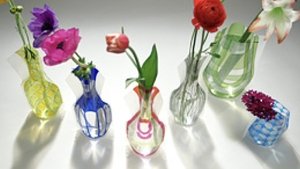
The kawaii aesthetic is one of Japan's best-known exports, and the Japanese themselves are finding new and innovative ways of exploring it. The word "kawaii" is often translated as "cute", but the idea goes much deeper, and it has been an important part of Japanese art and design for centuries. Why does Japan love kawaii? Guests Yoshie Watanabe and Ryosuke Uehara, the artistic directors of the KIGI design studio, discuss on today's show.
3
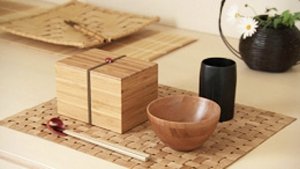
Since ancient times, bamboo has played an important role both in the everyday life of the Japanese and in the nation's culture and art. Bamboo can be seen everywhere, not only as the material for many kinds of products, but as a widespread motif in arts and crafts symbolizing, for example, auspicious events. Even today, bamboo is integral to life in Japan, used in everything from food to clothing and housing. Our guest, Tatsuyuki Kosuga, 5th generation owner of a 116-year old bamboo craft shop (founded 1898), will be our guide to the traditional bamboo designs still seen today and the innovative uses bamboo has inspired in modern designers.
These days, you can buy books online 24/7/365, including digital versions. Despite, or perhaps because of this change, many are reassessing the value of printed books and brick-and-mortar bookstores. In Japan, people appreciate books, including the designs on their covers, in some unique ways. This time our guest is Yoshitaka Haba, a "book director" who specializes in the artful arrangement of books. He talks about the history and the future of printed books, and what they mean to the Japanese.
5
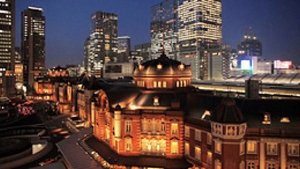
Time, the way we mark each moment of each day. Countless works of art and commercial products are made with time in mind. On today's program we welcome lighting designer Kaoru Mende, and take a look at designs that express the temporality of life, and discuss how people in Japan think about the passage of time.

6
This time, Andy leaves the studio and heads to Shobu Gakuen, a support center in Kagoshima Prefecture for people with intellectual disabilities. The center's motto is, "To create is to live", and the impressive works of art and design created there are garnering a lot of attention, both in Japan and abroad. As Shin Fukumori, the center's director, gives Andy a tour of the facilities, we discover how Shobu Gakuen has become a breeding ground for sensational art.
7
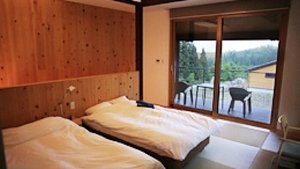
Soaking in a hot spring, eating great food, exploring a different local culture, making new friends - many Japanese lodgings offer all of this under one roof. Today's guest is Toru Iwasa, an editor of a lifestyle magazine who has spearheaded the creation of a "natural inn" in Niigata Prefecture. From the excellent service to the relaxed environment to the gardens that showcase the subtlest changes of the seasons, we look at Japanese lodgings, and how they intersect with the world of design.

8
In olden times, when the people of Japan faced natural disasters, disease or other misfortune whose cause they could not understand, they sought to attribute it to something ayashi... to anything that felt unsettling or frightening... the supernatural. And so in their imagination they conjured ayashi creatures like ghosts and goblins. This time on DESIGN TALKS, guest Koichi Yumoto, a leading researcher on the Japanese fairies known as yokai, discusses how the concept of ayashi is reflected in design.
9
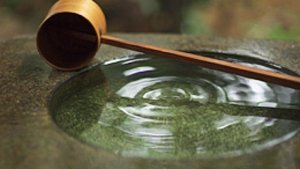
Japan is home to innumerable steams, rivers and lakes, and images of water hold a special place in the hearts of the Japanese. From a single drop of dew falling into a pond, to the spectacular spray of a waterfall, to the quiet quiver of a gentle breeze over the surface of a lake, water can evoke both the beauty and the fragility of life. Today's guest, garden designer and Buddhist priest Shunmyo Masuno, discusses the aesthetics of designing with water.
10
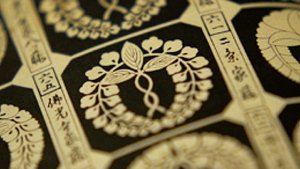
The evocative, energetic curves found in Japanese design - in the roofs of temples and shrines, in swords and in family crests - reflect an admiration for the curving forms of nature. Contemporary Japanese designers exhibit a unique mastery of the curve. Today's guest is Shoryu Hatoba, a painter of family crests who employs traditional methods passed down through generations of his family. Join us as we explore the role of curves in Japanese design.
11
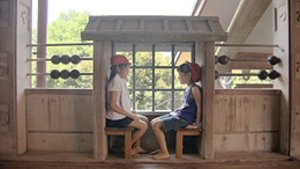
Children are overflowing with creativity and uniquely sensitive to new experiences. A child's schooling environment is an important part of her formative years - it's no exaggeration to say that what happens at school will change the course of her life. This week, architect Reiko Tomita discusses the schools that define our communities, and how design is shaping new educational trends in Japan.

12
Since ancient times, the color black has been an integral part of design in Japan, from samurai armor and lacquerware to the plaster walls of buildings. Today's guest, the calligrapher Sisyu, describes how she uses traditional black ink to explore new forms of expression, and helps us answer the question of what exactly the color black means to the Japanese.
13
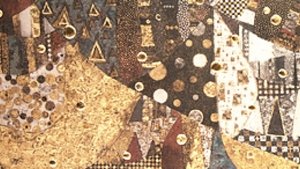
Zipangu, the Land of Gold. Around the 13th century, that was the name by which many Westerners knew Japan. In the 16th century, the development of gold mining in Japan made possible the construction of golden temples, golden teahouses and even solid gold Buddha statues. Gold is expensive, but also soft and easy to process, and it is still used today in a wide range of fields. Today we welcome Hakuga artist Takuro Noguchi into the studio to help us explore the world of designing with gold!

14
"Aqua design" involves filling a tank of water with plants, animals, and other living things to create a stunning work of art. In Japan, an island nation with lots of aquariums and a variety of unique craft skills, the field of aqua design has blossomed. This time, our guest is Hajime Nakamura, an "aquarium producer" who will give us a firsthand demonstration of how he creates his beautiful aqua designs.
15
DESIGN TALKS has featured a fascinating variety of designs from Japan and explored the artistic qualities that make them uniquely Japanese. Today we bring you highlights from all the episodes since April 2014. What discoveries did our hosts Andy and Shaula make during these first episodes? Join us as we take a second, deeper look at a wide range of Japanese designs.
16
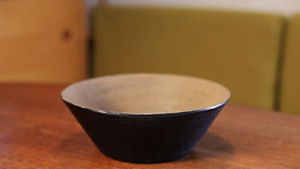
As interest grows in living a richer, more enjoyable life, something called "Seikatsu Kogei" - lifestyle or living crafts - have gained increasing attention. These crafts that are not traditional handcrafts, nor mass produced wares, are imbued with the spirit of their makers, who in a typically Japanese way, create by hand, select materials with care and aim to come up with new designs suited to contemporary lifestyles. We welcome as our studio guest, woodwork designer, Ryuji Mitani, to explore the roots of the beauty that dwells in form.
17
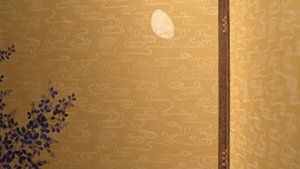
The moon has played a huge role in human culture, and Japan is no exception. The Japanese language is rich with words that describe the moon's phases and its mysterious beauty; the moon is often spoken of in Japan as more of a "friendly neighbor" than a celestial body. Today's guest, Akihiko Toto, is working to bring new life to the ancient art of karakami, a form of traditional papercraft that originally came from China. Join us as we take a look at works of art that incorporate the moon.
18
Clay has been deeply connected with human life since ancient times thanks to its ease of collection and use. In Japan, the development of the tea ceremony led to discovery of the wabi-sabi aesthetic in such things as tea ware and the earthen walls of the tea room, thus fostering its own clay culture. This time we invite plaster craftsman, and seasoned clay handler, Shuhei Hasado, to join us as we explore the many clay designs that have been passed down to our day, as well as the new possibilities there are for clay.

19
Eating has always been a central part of human existence - our kitchens may be the best indicator of how we live day to day. As lifestyles in Japan grow increasingly diverse, the very concept of "the kitchen" is being reevaluated. Architect Naomi Tanaka joins us as we delve into the designs and philosophies behind today's kitchens.

20
In the Buyo style of traditional Japanese dance, the act of dancing expresses not only emotions such as joy and sorrow, but also concepts such as respect for nature. In Noh and Kyogen, each movement has been refined over centuries, reduced to its simplest and most beautiful form so that its symbolic meaning is clear to every member of the audience. Today we welcome dancer and choreographer Yukio Suzuki to the program as we discover the beauty of movement in Japanese culture.

21
Nukumori is a Japanese word which means "warmth". And like the English word warmth, nukumori can express physical heat as well as "warm" feelings of gentleness and security. In parts of Japan where the winters are especially cold, various items and methods devised in ancient times to keep warm are still used today. This time, we invite industrial designer Fumie Shibata into the studio to discuss the concept of nukumori and designs that warm the body and soul.
22
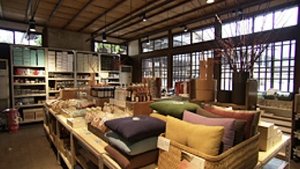
Kyoto is the birthplace of countless design styles that have evolved over centuries. Now, Kenmei Nagaoka, a designer known for a concept he calls "long life design", is leading a new project there. In November 2014, Nagaoka set up a select store at a temple in the heart of Kyoto, which he manages with a team of students from the university where he teaches. As we look at this inspiring new project, we'll take a journey through the fascinating world of Kyoto design.

23
In traditional Japanese belief, every object in the world contains a divine spirit. A constant awareness of these invisible presences is deeply embedded in the Japanese consciousness. Recently, more artists have been creating designs that focus on this collective memory. Joined in the studio by photographer Everett Brown, we'll discuss designs which shed light on Japan's memories of itself - in doing so, we'll visit an ancient world, and explore the question of whether there is a universal sense of beauty.
24
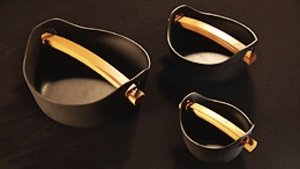
From production to processing, Japan has developed a unique culture around metal. The sharpness and beauty of Japanese swords are forged by pushing the material to its limits. Metal is also essential to cookware, including pots, pans and kettles. Our guest this time is Nobuho Miya, a caster who is designing a new kind of traditional Nambu ironware. Together, we'll discover the many facets of metal, and explore the metal designs which figure in everyday life in Japan.
25
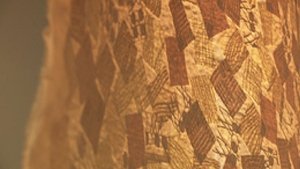
Textile design, including brightly patterned silks and dyeing techniques such as yuzen-zome, is an important part of Japan's kimono culture. Japanese textiles also feature in a wide range of other craft items - furoshiki cloths, noren curtains - many of which are still very popular today. We'll explore both the history and future potential of textiles in Japan with our guest, textile designer Reiko Sudo.
26
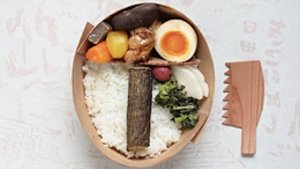
In Japan, there's a bento - a box packed with delicious seasonal foods - for almost every occasion. Maku-no-uchi bento are enjoyed at events like kabuki theatrical shows and sumo matches, whereas eki-ben are sold at train stations to hungry travelers. These days, people are even arranging the food in bento boxes into cute character designs. Art director Mitsuhiro Tomita is our guest this week as we take a look at Japan's long tradition of bento.
27
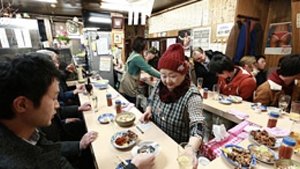
In Japanese, "sake" can refer to any alcoholic beverage, and this time, we're focusing on a variety of sake-related designs. Japanese bars and pubs are a treasure trove of fantastic design: red lanterns, noren curtains, casual counters and tables. The Japanese have also honed the design of sake glasses and cups that enhance the flavor of your drink. We'll explore the world of sake design with Kazuhiko Ota, a designer who's visited Japanese-style bars all across the country.

28
Japan is a mountainous country with a rugged coastline. This terrain is an important factor in the country's wide range of seasonal winds, which have had a strong impact on Japanese designers. Carp streamers, wind chimes and the architecture of traditional homes all make use of the flowing wind. On this episode of DESIGN TALKS, we look at the presence of wind in Japanese design with guest Susumu Shingu, who is famous for his "wind sculptures".

29
The power of design is changing prosthetic limbs, wheelchairs and other mobility aids. Today the goals are functionality and beauty in new devices that are designed to be seen. Meet special guest and designer Shunji Yamanaka, and see the creations of designers working to change our view of disability. Discover a new world of design.
30
DESIGN TALKS has featured a fascinating variety of designs from Japan and explored the artistic qualities that make them uniquely Japanese. Today we bring you highlights from all the episodes since October 2014. What discoveries did our hosts Andy and Shaula make during these first episodes? Join us as we take a second, deeper look at a wide range of Japanese designs.