Two of the greatest mysteries in cosmology are the nature of dark energy and the apparent conflict in our measurements of the expansion rate of the early versus the modern universe that even dark energy can’t account for. Could both of these be explained by looking to a part of the universe that we’ve largely ignored so far? Could cosmic voids be driving the universe?
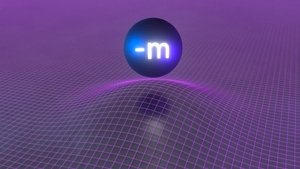
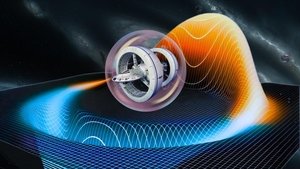
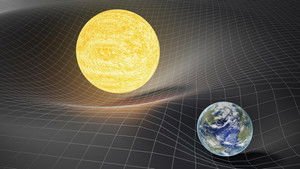
From hoverboards to flying cars to cloud cities, anti-gravity is a staple of science fiction and our dream of a less Earth-bound future. But in the real universe gravity appears to be a purely attractive force. Feels like its main MO is keeping us stuck to the surface of this lonely rock. But maybe if we science hard enough we can remove the fiction from science fiction. For the sake of our flying cars we should at least try. And for many years, physicists have wondered whether a certain well-known exotic material may experience gravitational repulsion from the Earth. That material is antimatter, and physicists at CERN have just completed a very long and very difficult experiment to answer a seemingly simple question: does antimatter fall down, or does it fall up?
This is what we astronomers call a blob, or a smudge, if you want to get really technical. It may not look like much from here, but what do you expect for something near the literal edge of the observable universe. If you were there when this light was emitted, you’d A. be at the beginning of time, and B. be looking at an entire galaxy containing an enormous black hole at its heart. It’s the most distant black hole we’ve semi-directly detected. That’s cool enough on its own, but as an added bonus this one smudge may have solved the mystery of the origin of the supermassive black holes in our universe.