The Lord of the Rings' Biggest Issue Finally Addressed by Andy Serkis Ahead of 'The Hunt for Gollum'
Collider
As far as fantasy worlds go, Middle-earth is right up there with the very best of them. Without much doubt, J.R.R. Tolkien's The Lord of the Rings is the most influential work of high fantasy ever created, and the same can be said of Peter Jackson's trilogy as well. The trilogy's depiction of Middle-earth was elite, setting the bar for modern fantasy and is seen as the genre's peak. After years of different attempts to expand The Lord of the Rings beyond the confines of Jackson’s original trilogy, a return to Middle-earth is fast approaching. Warner Bros.' long-awaited return to Middle-earth will soon be attained with The Lord of the Rings: The Hunt for Gollum, which is set to arrive on December 17, 2027.
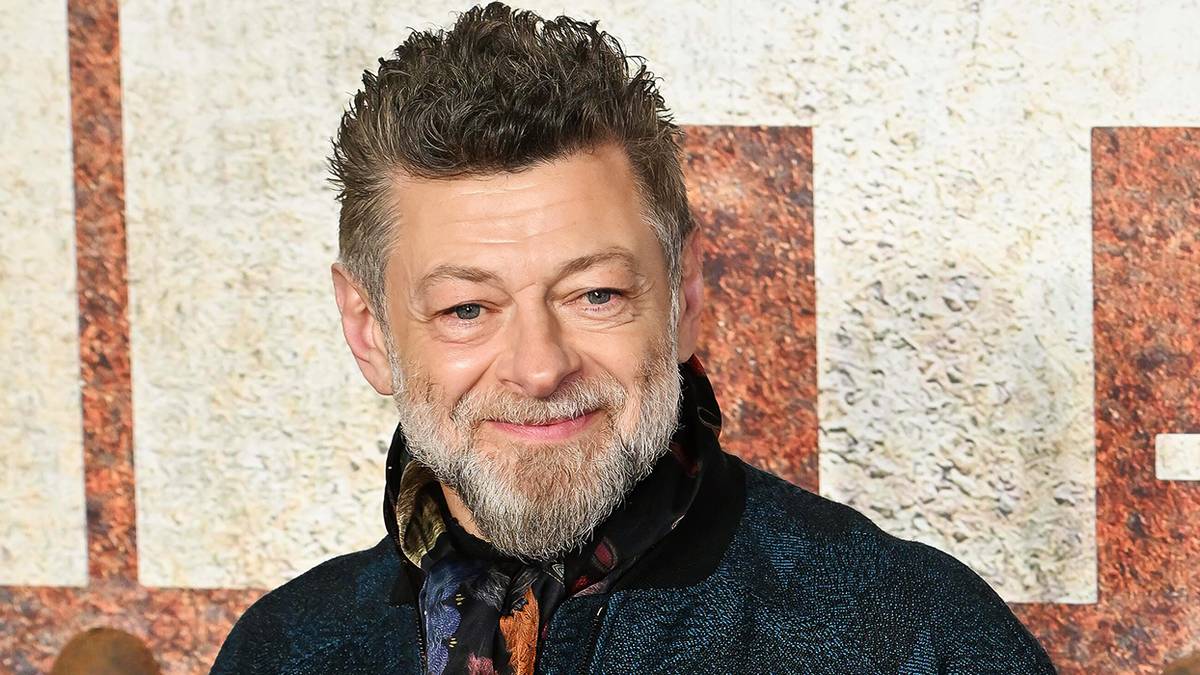
A return to the magnetic and ethereal surroundings of that world would be brilliant to say the list even as the film chronicles a story we are familiar with. Detailing the events before The Fellowship of the Ring, the film is expected to follow Aragorn’s search for Gollum after the wizard, Gandalf, perceives that his friend, Bilbo's old ring could potentially be a lot more dangerous than it looks. The upcoming fantasy film is directed by Andy Serkis, who also returns to play Gollum through motion capture and the actor was quizzed on a particular subject in a recent interview. Overall, one thing is certain. Tolkien is for everyone. Has been and always will be.
So, it is not surprising that The Lord of the Rings' perceived lack of diversity has been a subject to quiz Serkis on ahead of his Lord of the Rings film, The Hunt For Gollum. In an interview with the BBC, the director was questioned on some fan criticism of Serkis’ Hunt for Gollum cast, which so far only consists of white actors. Serkis himself, according to the BBC itself, who has been a campaigner for equality across his decades-spanning career, says his film will address diversity “where relevant” and without just “ticking boxes.” “Tolkien himself was influenced a lot by Norse mythology; there’s a lot of that feeling,” Serkis told the BBC. “The Shire feels very, very much like a very, a very white, you know…” Adding: “They’re not very concerned about what goes on beyond the borders of The Shire, but they know they don’t want people coming in.” He does concede that there “have been criticisms,” adding that: “This particular film is somewhat acknowledging that. But we don’t think we will be doing a politically correct just-casting-for-the sake-of-casting-and-ticking-boxes version of the film. So, it’s only where relevant basically.”
The race that claimed the most of your answers is your true kin. If two tied, both are shown — you walk between worlds.
You are, at your core, a creature of comfort, community, and quiet joy — and there is nothing small about that. Hobbits are proof that heroism does not require ambition, that the bravest heart can beat inside the most unassuming chest. You value good food, warm hearths, close friends, and a world that stays largely untroubled by dark lords and quests. When adventure does find you — and it will — you rise to it not because you sought it, but because the people you love needed you to. That is not ordinary. That is the rarest kind of courage in all of Middle-earth.
Ancient, graceful, and carrying a weight of memory most mortals cannot fathom, you are one of the Elves. You see the world in its fullness — its beauty, its impermanence, the unbearable ache of watching everything you love eventually fade. You pursue perfection not from pride, but because excellence is how you honour the time you have been given. Others may see you as remote or melancholy. They are not wrong, exactly. But they mistake depth for distance. You feel everything — which is precisely why you have learned to carry it so quietly.
Stubborn, proud, fiercely loyal, and possessed of a work ethic that would exhaust most other races before breakfast — you are Dwarf-kind through and through. You do not ask for approval and you do not offer it cheaply. Your loyalty, once given, is given for life. Your grudges last longer. You love deeply and defend ferociously, and the things you build — with your hands, with your sweat, with generations of accumulated craft — are made to last. Not for glory. Because anything worth doing is worth doing properly, and you have never once done anything by half measures.
Mortal, ambitious, flawed, and magnificent — you belong to the most complicated race in Middle-earth, and that complexity is your greatest strength. Men are capable of cowardice and extraordinary bravery, of cruelty and breathtaking sacrifice, sometimes within the same breath. You feel the urgency of your finite years, and it drives you. You want to matter. You want to leave something behind. You fall, and you rise, and the rising is what defines you. Tolkien called mortality the Gift of Men — not a curse, but a fire that burns bright precisely because it does not burn forever. That fire is you.
Brutal, survivalist, and contemptuous of anything that can't defend itself — you answered with the instincts of an Orc, and there is a certain savage honesty in that. You do not dress up your desires in polite language or pretend you want things you don't. You want power, survival, and to never be at the bottom of any hierarchy ever again. Orcs are not evil by nature — they were made from something that was once good, and broken into this shape by forces they did not choose. What remains is fierce, territorial, and deeply aware that the world is not kind. You've made your peace with that. The question is what you do with it.
Serkis' comments come amidst a storm of criticism within certain quarters for Christopher Nolan's upcoming epic, The Odyssey, whose casting choices have been questioned for different reasons. Besides Serkis, the cast of The Lord of the Rings: The Hunt for Gollum also includes Ian McKellen (X-Men) as Gandalf the Grey, Lee Pace (Guardians of the Galaxy) as Thranduil, and Jamie Dornan (Belfast) as Aragorn, replacing the beloved Viggo Mortensen. Kate Winslet (Titanic), Leo Woodall (The White Lotus), and Anya Taylor-Joy (The Queen's Gambit) as Seren have also been cast. Serkis directs from a screenplay by Phoebe Gittins and Arty Papageorgiou and the original creative team behind Jackson’s trilogy: Philippa Boyens and Fran Walsh. Jackson, Walsh, and Boyens are also producing.
 Netflix’s 96% RT Dystopian Thriller Returning For Season 2 Deserves To Be As Big As Silo
 Sinclair-Owned ABC And NBC Stations Preempt Networks To Carry Trump Primetime Speech
 Berlinale Title ‘Members of the Problematic Family’ to Open Indian Film Festival of Melbourne (EXCLUSIVE)
 Donald Trump Says ABC And NBC Should Lose Broadcast Licenses Because They Didn’t Carry His Primetime Address On Election Claims
 Netflix Unveils ‘Queenstown,’ Its First New Zealand Series
 HBO Quietly Brings Back One of ‘Game of Thrones’ Most Iconic Locations
 Guy Ritchie's 10/10 Crime Thriller Beats Taylor Sheridan at His Own Game
 Prime Video’s ‘God of War’ Series Suffers Major Setback
 Titus Welliver Officially Replaces 'Bosch' With Van Helsing in New Vampire Horror Release
 Paramount+ Subscribers Fail to Block Warner Bros. Merger as States Will Try Again Friday