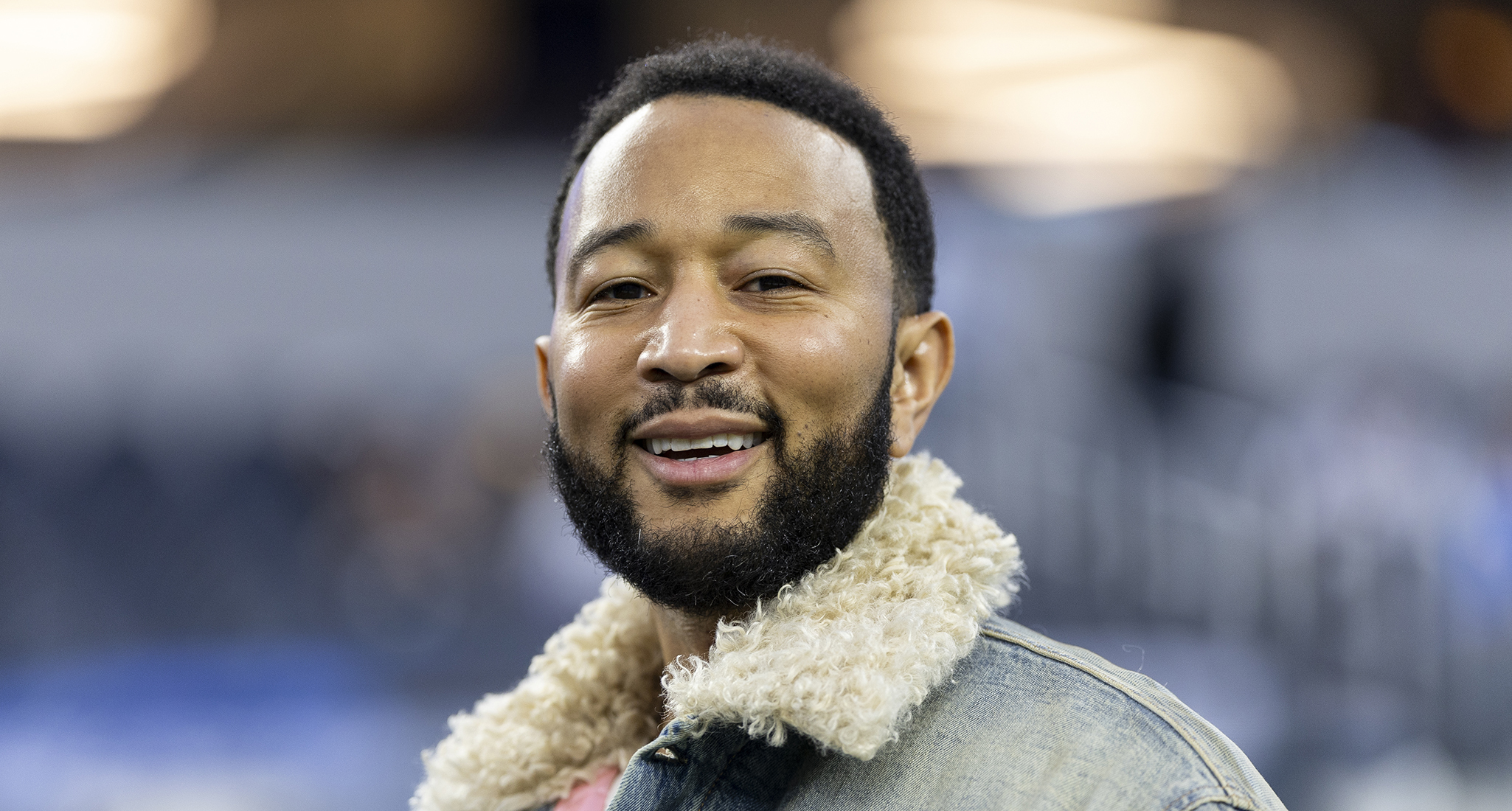
John Legend is preparing to bring to the big screen a historical period where music and political struggle are inseparable.
The Oscar, Grammy, Emmy, and Tony award-winning artist will portray musician and human rights advocate Harry Belafonte in the film The Road Home. The film is directed by Bill Condon, known for Dreamgirls, Gods and Monsters, and Kiss of the Spider Woman.
While the production continues filming in South Africa, the focus is not on Belafonte but rather on South African jazz trumpeter and anti-apartheid activist Hugh Masekela. Thabo Rametsi will play Masekela, Cynthia Erivo will portray Miriam Makeba, Johnny Flynn will take on Paul Simon, and Guy Pearce will play Archbishop Trevor Huddleston.
John Legend Knew Harry Belafonte Personally
After the announcement of his role, John Legend highlighted his personal relationship with Harry Belafonte.
Describing Belafonte as his friend, mentor, and collaborator in the fight for justice, Legend stated that he never separated Belafonte's artistic identity from his political responsibility. He noted that Belafonte set a standard for himself and future generations, expressing that he sees it as a privilege to be entrusted with this role.
Previously, Legend emphasized in a statement following Belafonte's death that he was not just a successful singer; he used his art, income, and public power to support the civil rights movement.
This personal connection elevates the casting decision beyond mere physical or stage resemblance between the two musicians. Legend will bring to life the relationship between an artist he says guided him and activism through music.
The Film Will Not Be a Harry Belafonte Biography
Despite John Legend's involvement, The Road Home is not a classic biographical film that tells Harry Belafonte's life from start to finish.
The story focuses on the political and artistic dilemmas faced by Hugh Masekela, who was exiled from his country in the 1980s. Masekela finds himself torn between his mentor, Archbishop Trevor Huddleston, who advocates for a cultural boycott against the apartheid regime, and his friend Paul Simon, who collaborated with South African musicians on the Graceland album.
According to the official synopsis, the anti-apartheid movement led by Huddleston accuses Paul Simon of violating the United Nations' cultural boycott against South Africa.
Masekela views music not as an obstacle in the struggle but as a powerful tool to convey an anti-apartheid message to the world. The artist forms a music collective with Miriam Makeba to bring South Africa's voice to an international audience.
The Success and Controversy of Graceland Will Be Explored
The Road Home will not only present Paul Simon's 1986 Graceland album as a musical success story.
While the album played a significant role in the global recognition of South African musicians and music genres, it sparked a major debate about whether the recording process weakened or upheld the cultural boycott against the apartheid regime.
The film's conflict centers precisely on this point: Should one adhere to the boycott imposed to prevent cultural relations with an oppressive regime, or should one amplify the voices of artists silenced by the same regime through music?
Masekela's struggle between the two sides sets the production apart from a traditional music film that narrates the making of an album. The story will question whether art can remain neutral during political crises and to what extent an artist is responsible for the consequences of their work.
Therefore, Johnny Flynn's portrayal of Paul Simon is expected to depict him not only as a world-renowned musician but also as a figure at the center of the debate over decisions. The production team has yet to detail the perspective from which the film will interpret historical events.
Cynthia Erivo Will Portray Miriam Makeba
Cynthia Erivo takes on one of the lead roles in the film.
Erivo will portray singer Miriam Makeba, known as “Mama Africa,” who had to live away from her country for many years due to her anti-apartheid statements. In the film, Makeba will serve as both Masekela's lifelong creative partner and his most significant ally in the effort to bring South Africa's voice to the world.
New recordings of Masekela and Makeba's works are also being prepared for the production. Music producer Hilton Rosenthal will oversee the re-recording of selected pieces from the two artists' catalogs for the film's soundtrack.
In this way, The Road Home will not just use music as an element that provides the period atmosphere. It will become a primary narrative tool representing the characters' differing views on how to fight against apartheid.
Guy Pearce Will Advocate for Cultural Boycott
Guy Pearce will appear as Archbishop Trevor Huddleston, one of Hugh Masekela's mentors.
In the film's official summary, Huddleston is positioned as one of the pioneers of the movement advocating for a strict cultural boycott against the apartheid regime and opposing Paul Simon's collaboration with South African musicians.
The central personal conflict of the story will arise from the disagreement between Huddleston and Masekela. Although both characters fight against the same regime, they will stand on different sides regarding how art should be used in this struggle.
Thus, the film does not simply set up a dichotomy of “freedom supporters versus apartheid supporters.” It narrates how people with the same political goal can diverge on methods, boycotts, and cultural collaboration.
The Script Was Written Drawing from Hugh Masekela's Legacy
The script for The Road Home was penned by Michael Bronner, known for The Mauritanian and United 93. South African writer Zakes Mda also contributed to the development of the story.
Bronner was commissioned for the project by the Hugh Masekela Heritage Foundation. The foundation provided the production team with information about Masekela's life, thoughts, and political approach during the script process. It was also revealed that Bronner had extensive discussions with Paul Simon during the preparation.
This collaboration could provide the film with a strong historical foundation from Masekela's perspective. However, Paul Simon's involvement in the research process indicates that the story aims to present more than just one side of the debate.
Ultimately, which perspective the film will lean towards—whether to emphasize the cultural boycott or the transcending power of music—will remain unknown until its release.
Filming Continues in South Africa
The Road Home is being filmed in various locations across South Africa, primarily in Cape Town.
In STUDIOCANAL's initial production announcement, it was stated that the film plans to employ approximately 300 local crew members and up to 3,500 extras in crowd scenes. The estimated budget for the production was announced to be around 300 million South African rand.
The film is being produced by STUDIOCANAL, Flora Films, and South African co-producer Blue Ice. STUDIOCANAL is also involved in the financing side of the project, with Laura Bickford, Michael Bronner, Greg Yolen, and Anant Singh in the producer lineup.