Netflix Has Quietly Released the Most Spellbinding Fantasy Epic of 2026 | Review
Collider
Comedies, soaring romances, political epics — a quality historical drama never gets old. The best variations on this long-standing staple of Korean television flourish thanks to the sub-genre's reliable and flexible structure. All that traditional costume drama appeal — the visual splendor of a bygone period — pairs perfectly with time travel whimsy, forbidden love, and the scheming, backstabbing web of political corruption lying coiled underneath the glamour.
The East Palace puts a supernatural horror spin on court drama intrigue. The Netflix original arrives surrounded by a torrent of anticipatory buzz. Its three primary leads are some of the reigning best in the business, and director Choi Jung-kyu (The Devil Judge) and screenwriters Kwon So-ra and Seo Jae-won (Bulgasal: Immortal Souls) have ample experience with acclaimed, eminently watchable dark fantasy thrillers. The East Palace is no exception. Netflix and the Imaginus production company — last year's Tempest and the recent hit Can This Love Be Translated? — have delivered the first K-Drama blockbuster of 2026.
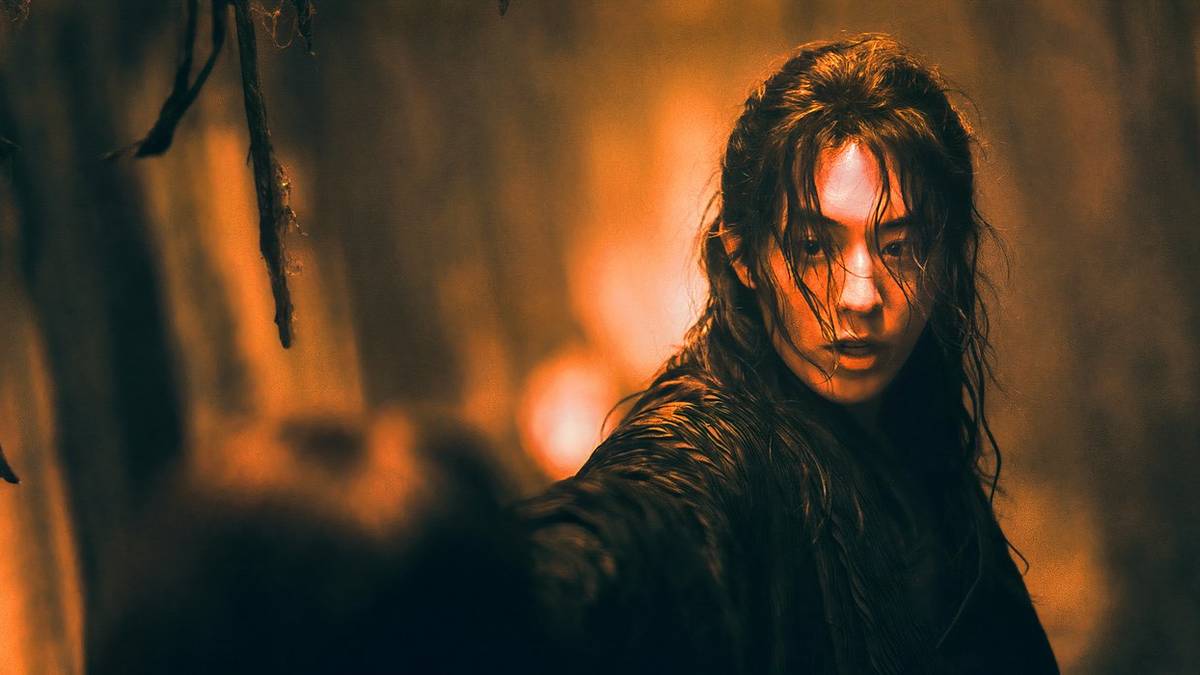
Something has cursed the royal family — or someone. Nearly all the King's (Cho Seung-woo) heirs have perished under incomprehensible circumstances. Desperate to drive out the demonic force before his youngest son suffers the same fate, the King kidnaps Gu-cheon (Nam Joo-hyuk), a preternatural expert on all things spiritual. A childhood near-death experience has granted Gu-cheon the ability to both see the spirits who reside in the mortal realm and to (painfully) travel into their hellscape, a crimson-tinted dimension called the Realm of Gwi. Some spirits are mythical innocuous irritants, and others are nefarious human souls determined to punish those who inflicted profound injustices upon them before their deaths. These lingering tempests of fury can't pass into a peaceful afterlife until they heal from their resentment. If Gu-cheon's words can't reach them, then his sword usually does the job.
It's precisely because of his traumatizing past and his "I see dead people" predicament that Gu-cheon would prefer to sleep his days away in an inebriated haze. Unfortunately, if he doesn't banish the ghostly murderer with all expediency, the King will personally sever Gu-cheon's head from his shoulders. Together with Saeng-gang (Roh Yoon-seo), a noblewoman who hears phantasmal whispers and conceals a separate agenda, Gu-cheon investigates the palace's history. To no one's surprise, there are too many sordid proverbial skeletons in the royal closet to count. Who is the real enemy? Can anyone be trusted?
From Episode 1 to the finale's last frame, The East Palace is beautiful to watch. No aspect of the production design feels compromised by budget allocation, be it the sunlit outdoor scenery filmed on location in Yeoncheon County, Gyeonggi Province, the exterior and interior castle architecture, or the eye-catching costumes with their precise, woven detailing. The simplest sight, like Gu-cheon descending into the lake at night, carries a pervasive sense of heaviness as the navy-blue water gradates into shadows and the moonlight splinters over the surface.
A series shaped around Korean folklore and shamanism, and therefore heavily reliant on computer-generated visual effects, needs the proper visual heft. If the CGI falls short, the suspension of disbelief shatters. The East Palace has plenty of room to creatively play with the Realm of Gwi's visual identity and the various monsters' otherworldly designs. The former excels with color-coding, starkly contrasting the human world and Gwi's (yes, the ears of KPop Demon Hunters fans will perk up at "gwi-ma") infernal mirror. As for the latter, the easiest immediate comparisons might be All of Us Are Dead or Sweet Home, but The East Palace's gruesome threats evoke the series' folklore inspirations. The action sequences' ambitious choreography and sleek accompanying cinematography practically steal the show.
Another contender for the show-stealing award must go to the cast's captivating performances. With almost 30 award wins and a sublime track record (Stranger, Sisyphus: The Myth) under his belt, the highly regarded Cho has proved he can play any archetype under the sun with a measured nuance that invites studying. It's no surprise that one of Korea's finest current working actors is magnificent here; he glides from cunning, imposing, smug, livid, and a man harboring slivers of untapped affection and anguish on an effortless-seeming dime. The East Palace marks his first time on the small screen since 2023 and his first time joining a streaming-exclusive series, and he's worth the figurative price of admission.
Roh, the most newcomer-adjacent of the main trio, continues riding the fame wave after her breakout roles in Crash Course in Romance and Hear Me: Our Summer each secured her a prestigious award. This is the kind of phenomenal star turn that would propel her into the limelight if she wasn't already commanding it — a wronged woman who's a crack shot with a bow and arrow, fearsome, composed, pragmatic, prone to losing her temper, yet always a heat-seeking revenge missile aimed at the architect of Saeng-gang's tragic loss. The demeanor she presents to the world is, of course, a shield born from that very same trauma. The more tragedies that strike her wounded heart, the more her living spirit unravels.
Nam also rejoins the K-Drama world after three years. Given his reputation as a versatile and charismatic romantic lead in contemporary series (Twenty-Five Twenty-One, Weightlifting Fairy Kim Bok-joo), it's fantastic to see him tackle a historical action protagonist. He hits just the right notes of exasperated wisecracks, resigned determination, and tormented world-weariness. Gu-cheon holds his internal haunting at bay, but only just; like his round trips to the spirit realm, his pain and guilt always resurface. As for The East Palace's narrative foils and partners in ghost hunting, Gu-cheon and Saeng-gang's gently blossoming chemistry flourishes their journey from spine-bristling dislike and combative bickering into a trusted companionship. The romance crowd will detect the undercurrents of a little something more than friendship, but above all, Saeng-gang is Gu-cheon's equal and guardian. They protect and rescue each other. Overall, the series' best moments aren't the monster-slaying bloodshed but the familial beats — where old reopened wounds and fresh betrayals cut equally deep.
A few scenes do fall prey to television's low-lighting trend. The East Palace's dialogue can also be a little too on the nose at times. Since it balances a plethora of concepts, rules, and revelations, this series is a case where overclarification or overt statements can be forgiven. The momentum driving its intriguing start doesn't waver, but the mix of bloodthirsty scheming, supernatural horror, and royal family drama truly kicks off like a rocket launch at the halfway point. I value my sleep, but once the sinuous twists struck like cascading dominoes, I stayed up until the wee hours to finish all eight episodes. If The East Palace sounds like your kind of rollercoaster ride through elegant production, polished action, and epic period fantasy, you'll likely do the same.
 Paramount-Warner Deal Faces Weeks Of Uncertainty As British Lawmakers Go On Summer Break
 ‘Rivals’ Star Annabel Scholey Joins Netflix Thriller Series ‘The Lord’s Day’ Alongside Damson Idris and Harry Lawtey (EXCLUSIVE)
 6 Pokémon ROM Hacks That Do Justice To Johto
 Animation Finally Gets Its Own Green Certification
 BBC Studios No Longer Part Of Donald Trump’s $10B BBC Defamation Lawsuit
 McDonald's Teases New Pokémon Happy Meals, But Expect Them To Sell Out Fast
 Aamir Khan Denies ‘3 Idiots’ Character Was Based on Activist Sonam Wangchuk
 Heartstopper Forever Review: A Satisfying Finale For One Of Netflix’s Best Coming-Of-Age Stories
 Netflix’s ‘Heartstopper Forever’ Is a Wistful and Mature Ending for Charlie and Nick’s Love Story: Review
 ‘The Odyssey’ Launches Weekend Voyage With Thursday Previews Around $15M U.S. – Box Office